Τμήμα Ωκεανογραφίας και Θαλασσίων Βιοεπιστημών
- +30 22510 36800
- secr-marine@aegean.gr

PROSPECTIVE STUDENTS
Prospective students
Dear prospective students,
University level studies will undoubtedly be one of the most interesting and creative periods of your life. The Department of Marine Sciences welcomes you in this life-changing journey, and encourages you to explore the captivating world of Oceanography.
As you can see from our Study pages, we offer a mature and focused undergraduate course that will provide you a working knowledge of Oceanography and its related marine sciences, and equip you with highly competitive transferable skills such as teamwork, leadership, and creative scientific thinking. Our Department has much to offer you, and we look forward to your further inquiry..
- What is Oceanography?
Oceanography covers a wide spectrum of disciplines that uses insights from physics, biology, chemistry, and engineering to analyze ocean currents and waves, marine ecosystems, marine organisms and their interactions, geophysical fluid dynamics and features of the ocean floor, within the ocean and across coastal boundaries. The understanding of marine biological, chemical, geological, meteorological, and physical processes allows sustainable resource management and the protection of the marine environment.
Oceanography is a demanding, but captivating science that will deepen your insight into our blue planet, and help you make a difference in its conservation.
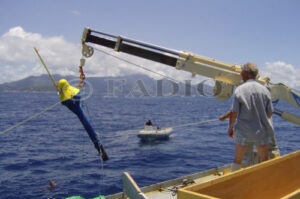
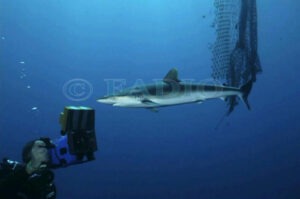
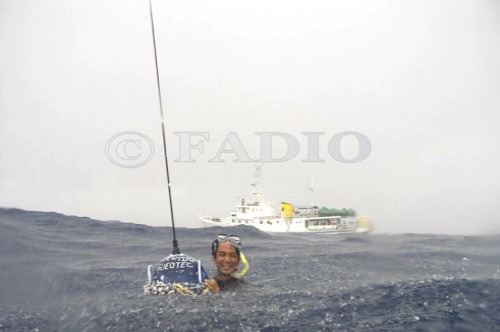
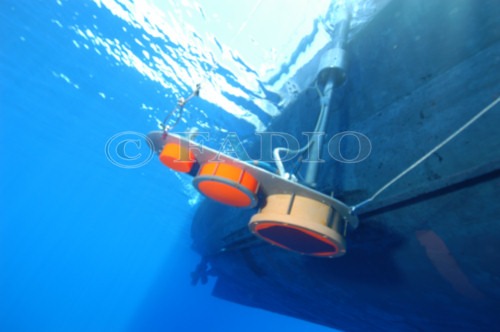
- Economically relevant studies
With 6,000 islands or islets and more than 13,000 km of coastline, Greece’s economy is naturally dependent on maritime activities. The numbers can be overwelming: more that 1/3 of the Greek population lives in the coastal zone, and over 18% of the annual Gross National Product is produced from tourism associated to the marine and coastal environment. The fishing and aquaculture sector yields 284 millions and 345 million euros respectively, while fishing activities secure the employment of more than 37,500 persons and maintain the cultural status of the Aegean Archipelago.
- Career information
- International students
- Frequently Asked Questions
Career information
Our graduates are equipped with the academic and practical skills needed to respond to a wide range of rewarding careers in marine sciences, a field where new jobs are expanding internationally due to continuing advances in technology and a growing appreciation for the importance of the oceans to all life on earth. Depending on their skills and ambitions, marine science graduates may find opportunities in academia, industry, government, non-profit organizations and consulting firms, or build their own businesses; in fact, the possibilities for a marine related career are as varied as one’s desires and imagination:
Marine biology: Scientists in this field study the behavior, ecology, and interactions of plants and animals that live in the ocean, as well as their roles in the marine food chain. Just because there are so many topics within this field, many graduates select a particular interest and specialize on it, focusing for example on a particular species, organism, behavior, technique, or ecosystem.
Oceanography: Physical oceanographers study the ocean and its motion, from the gentle movements of ocean currents to the power of tidal waves. Geological oceanographers study the evolution of the seafloor and the minerals found there. Chemical oceanographers study the chemicals and chemical compounds in the oceans, as well as the level of pollution in the marine environment. And if that’s not enough, you have people working on fisheries acoustics, bioacoustics and marine mammals. This is why some of the most important oceanographic discoveries have been made as a result of an integrated approach involving geologists, chemists, biologists, physical oceanographers, and engineers.
Aquaculture: This is science of farming of fish, shellfish, and seaweeds, and is another field that is gaining importance in Greece as consumer demand for fish and shellfish becomes greater than can be met by traditional commercial fishing.
Ocean engineering: Here you’ll find those who design and build the instruments, equipment, vehicles, and structures used in marine exploration and research, including people like environmental engineers, designers, electrical and mechanical engineers, or software developers. Don’t underestimate these guys; they are the workhorse of our research, playing a key role out in the field and within all successful research teams.
Economics, management, and other related fields: Whether you imagine yourself being good in underwater filmmaking, marine economics, environmental education, or resource management, our Department’s degree will provide you with the groundwork needed to pursue your dreams. We will certainly not attempt to list all futher possibilities here, but here’s a small part of it: ecotourism guide, beach superintendent, coastal or ocean policy consulntant, marine or aquatic animals expert, economist, marine archaeologist, marine historian, fundraiser or spokesperson, environmental planner, aquaculturist, coastal conservation manager, hatchery specialist… It is an ocean of opportunities.






Some cool websites..



International students
Overview
University education in Greece is designed towards a high level of theoretical and all-round training. The duration of undergraduate study programs is generally four years, except from paricular faculties where courses can last up to five or six years. The academic year consists of two semesters with thirteen tuition weeks and three weeks of final exams.
International students admission & entry requirements
International students can only be admitted to higher education institutons in Greece through examinations conducted by the Ministry of National Education and Religious Affairs. General instructions for international students are can be found here, however there can be many technicalities involved, so candidates are strongly encouraged to contact the Ministry at:
Ministry of Education and Foreign Affairs
Directorate of Organizing and Conducting Examinations
37, Andrea Papandreou St.
GR-151 8, Marousi, Athens
GREECE
Phone: (+30) 210 344 2000 | 344 2505 | 344 2506 | 344 2508
Oceanography covers a wide spectrum of disciplines that uses insights from physics, biology, chemistry, and engineering to analyze ocean currents and waves, marine ecosystems, marine organisms and their interactions, geophysical fluid dynamics and features of the ocean floor, within the ocean and across coastal boundaries. The understanding of marine biological, chemical, geological, meteorological, and physical processes allows sustainable resource management and the protection of the marine environment.
The Campus is located approximately 4 km south of Mytilene, the capital city of Lesvos island, and is easily accessible both from downtown and the Odysseas Elytis airport. Please view our visitors information page for detailed information and downloadable material.
No, the Department of Marine Sciences is the nation’s only academic institution that offers Bachelor, Master and Ph.D. degrees in Oceanography.
The University has an open campus that you are welcome to explore, and all lectures are open to public. This however may not apply to some laboratory classes, workshops, or field trips, and best practice is to contact the Professor in charge.
Undergraduate courses are only tought in Greek, and Greek is also used in most course materials and handouts; on a postgraduate level, our Biodiversity conservation MSc course is tought in English. Overall, being an international student in Greece would normally require that you have a reasonable competency in the Greek language, and hold a basic certificate that denotes this skill. Please consult this page for details on Greek language courses.
It is a four year study program.
Greek and EU international students do not have to pay tuition fees for undergraduate studies. Note however that this may not apply to non EU-member international students. Please visit this page for further details, or contact us.
Yes, our Department strongly supports student internships with industry partners, private firms, research centers, and governmental or non-governmental organisations, and this practical training experience is actually part of the undergraduate curriculum.