Τμήμα Ωκεανογραφίας και Θαλασσίων Βιοεπιστημών
The research of the Laboratory of Physical & Chemical Oceanography is related to physical and chemical processes determining the characteristics of the World Ocean, regional seas and marine ecosystems, and their variability.
Processes related to anthropogenic climatic change, as well as their impact on the determination of the physico-chemical characteristics of the sea are increasingly becoming a subject of this Laboratory’s research. Although a significant part of the research is conducted through research projects, the provision of services to the public and private sector also contributes to the purchase of new and service of older equipment.
Parallel to the oceanographic research through collection and analysis of observations and conducting of numerical simulations, a significant part of this group’s research activity is directed to the development of methodologies and the design of new instruments, specialized for specific use, as oil-spill monitoring and the evaluation of coastal HF radar measurements.
Support of Blue Growth
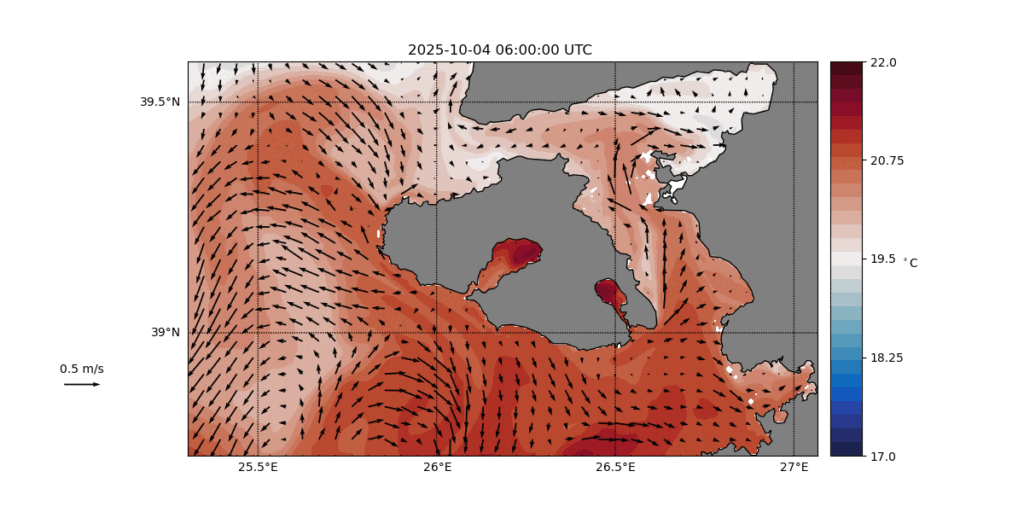
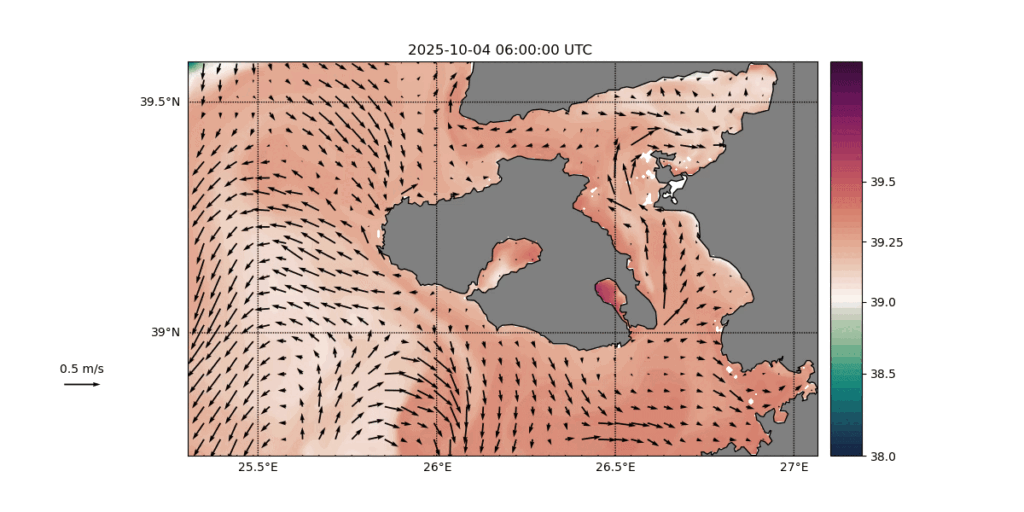
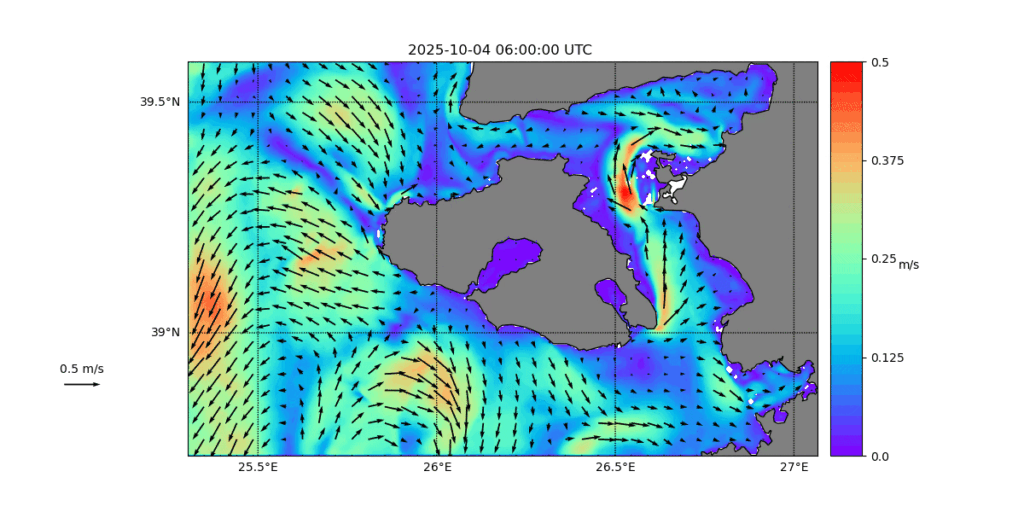
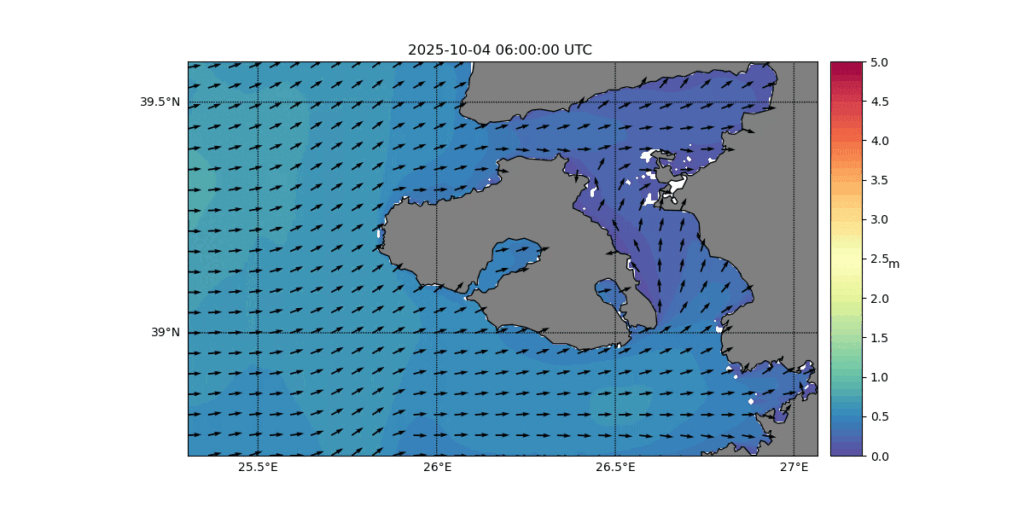
The Laboratory has developed the necessary infrastructure and knowhow to provide information in the form of marine observations and continuous, free provision of operational forecasts about the North / Central Aegean Sea, the coastal area around Lesvos island, and the bays of Gera, Kalloni and Moudros. Το Εργαστήριο έχει αναπτύξει τις απαραίτητες υποδομές και τεχνογνωσία για να παρέχει την απαραίτητη πληροφορία υπό μορφή παρατηρήσεων στο θαλάσσιο περιβάλλον αλλά και συνεχή και ελεύθερη διάθεση επιχειρησιακών προγνώσεων στο διαδίκτυο για το Βόρειο και Κεντρικό Αιγαίο, την θαλάσσια περιοχή γύρω από τη Λήμνο και τους κόλπους Γέρας, Καλλονής και Μούδρου. Η προσπάθεια αυτή εντάσσεται στο Παρατηρητήριο Παράκτιου Περιβάλλοντος AEGIS, η υλοποίηση του οποίου έχει υποστηριχθεί από τα έργα AEGIS και AEGIS+, ενώ συνεχίζεται με αυτοχρηματοδότηση. Παράλληλα, σημαντική δραστηριότητα έχει αφιερωθεί στην εκτίμηση των επιπτώσεων της ναυτιλίας στη θαλάσσια ρύπανση (μέσω του έργου EMERGE), στα πλαίσια της οποίας αλλά και του παρατηρητηρίου AEGIS έχουμε αναπτύξει και τη χρήση μοντέλου προσομοίωσης βιογεωχημικών διεργασιών στη θάλασσα, ιδιαίτερα ρήσιμου για την εκτίμηση των επιπτώσεων ανθρωπογενών παρεμβάσεων στην παράκτια ζώνη.
Mediterranean Thermohaline Circulation and interaction with the Black Sea
The Laboratory of Physical & Chemical Oceanography has been studying the variability of the Mediterranean overturning circulation with emphasis on the Aegean Sea thermohaline functioning, as it is determined by the exchanges with the atmosphere and adjacent basin, as well as climate change. Several research projects (MedEcos, MedEX, SESAME, PERSEUS and CCSEWAVS-THALES), and doctoral research (Angeliki Sampatakaki, Stamatis Petalas, Manos Potiris) have been conducted within this activity.
HF radar use
Aiming in the long term to generate a time-series of exchange between the Aegean and the Black Sea, we installed and operate the HF radar “Dardanos” on the east coast of Lemnos island. This move introduced us to a new, very interesting research field, the operational monitoring of surface circulation for better coastal protection in case of marine pollution. Within the same research activity we apply and develop our already existing expertise on Lagrangian methods. This activity has been supported by the research projects CORI, DIAVLOS and TOSCA and largely constituted Ζoi Kokkini’s doctoral research. At present, the HF radar DARDANOS is undergoing upgrade and re-installation in the framework of the project HIMIOFoTS.
Lagrangian Methods and Instruments
Accumulated expertise in the application of Lagrangian methodologies in the marine environment (since the mid-1990s with V. Zervakis’ participation to the project Eurofloat) has gradually led to the design and application of new Lagrangian instruments (see products), supported through various research projects (DIAVLOS, TOSCA and STRING), the undertaking of new doctoral research subjects (Agisilaos-Alexandros Dimitrakopoulos) as well as the work of postdoctoral researchers (Alkiviadis (Alkis) Kalampokis).
Oceanographic use of underwater telephone cables
The laboratory is the first oceanographic organization in Greece to make use of an underwater telephone cable to monitor water volume trasnports. This has taken place in the framework of the project Kalloni Model, and involves the cooperation of several students, faculty and foreign collaborators such as the team of prof. Ayal Anis, from Texas A&M University.
Physical – Biological Interactions
Physical-biological interactions are part of the research activities of this group through the study of the N. Aegean ecosystem fertilization mechanisms like the interaction with the Black Sea and coastal upwelling. This research has been icorporated in two doctoral theses (Anastasia Papadopoulou, Ioannis Mamoutos) with the support of two research projects (AegeanMarTech – THALES and HERACLITUS ΙΙ).
Small-scale processes and mixing
Our research activities are complemented by the contribution to the study of turbulent mixing and double diffusion in the marine environment. This research activity is funded by projects like PERSEUS and is realized through the doctoral research of Sotiris Kioroglou and Ioannis Mamoutos.
Microplastics in the sea
Fianlly, our lab studies the effects of microplastics dispersion in the marine environment, through Doctoral Research projects (Dimitra Marmara).
The Physical & Chemical Oceanography group is adequately equipped to perform research in the coastal environment.
In more detail, the group,
The group’s research is conducted in the framework of National, European and International research projects, as well as environmental studies / services to the Public and Private Sectors.
On the 28th January 2020 , a mixed team comprised on personnel from METRICA, LPCO, divers of the J. Arampalis team and the crew of the “IOANNIS S” tugboat, deployed our oceanographic mooring in the Gulf of Kalloni, in the framework of the project AEGIS. In parallel with the installation of two tide-gauges at Skala Kallonis and Skala Sykountos, we steadiy proceed with the implementation of the Coastal Environmental Observatory AEGIS, aiming to focus our coastal research and education in the Gulf.
“…it works…”
On Sunday, Februay 3rd, 2019, in the framework of the projact “Model Kalloni”, we had the first evidence that we may be able to monitor the water mass exchange through the Strait connecting Kalloni Bay with the open sea, via a submarine telephone cable (in collaboration with OTE).
The program NAVGREEN aims to improve the environmental footprint of shipping. It focuses on the following key areas: development of alternative solutions to traditional fuels, improving energy efficiency in ships and ports, using new digital technologies for better operational management, and encouraging recycling and the use of biofuels. Through the NAVGREEN program, shipping will become more sustainable and efficient..
The “National Research Network for Climate Change and Its Effects – CLIMPACT” is an interdisciplinary consortium comprising of 28 members from the academic and research communities in Greece and Cyprus. This consortium is dedicated to addressing issues related to Climate Change (CC) and the associated climate risks, natural disasters, as well as social and economic impacts.
The project “Coastal Environment Observatory and Risk Management in Island regions (AEGIS+)” (MIS 5047038), (MIS 5047038) is implemented within the Operational Programme “Competitiveness, Enterpreneurship and Innovation” (NSRF 2014-2020), cofinanced by the Hellenic Government (Ministry of Development and Investments) and the European Union (European Regional Development Fund, Cohesion Fund).
The project is the product of a joint proposal of six Research Laboratories of the University of the Aegean and aims to establish a Regional Research Infrastructure in the North Aegean, with the following Strategic Objectives:
(i) to support environmental protection and sustainable development of the Aegean island
(ii) to make the North Aegean a pole of attraction for research and educational activities
(iii) to provide relevant services / products in the Aegean island area (initially mainly in the North Aegean), to
support vital socio-economic activities, and assist in the implementation of regional and national legal obligations for adaptation to the Climate Change of island regions; and
(iv) to supplement / strengthen other relevant national Infrastructures (eg HIMIOFoTS and ENIRISST).
The project “Coastal Environment Observatory and Risk Management in Island regions (AEGIS+)” (MIS 5047038), (MIS 5047038) is implemented within the Operational Programme “Competitiveness, Enterpreneurship and Innovation” (NSRF 2014-2020), cofinanced by the Hellenic Government (Ministry of Development and Investments) and the European Union (European Regional Development Fund, Cohesion Fund).
The project is the product of a joint proposal of six Research Laboratories of the University of the Aegean and aims to establish a Regional Research Infrastructure in the North Aegean, with the following Strategic Objectives:
(i) to support environmental protection and sustainable development of the Aegean island
(ii) to make the North Aegean a pole of attraction for research and educational activities
(iii) to provide relevant services / products in the Aegean island area (initially mainly in the North Aegean), to
support vital socio-economic activities, and assist in the implementation of regional and national legal obligations for adaptation to the Climate Change of island regions; and
(iv) to supplement / strengthen other relevant national Infrastructures (eg HIMIOFoTS and ENIRISST).
Especially in relation to HIMIOFoTS, the AEGIS + infrastructure comes to bridge the area between open
sea and inland waters.
Actions have been planned for pilot applications of the research infrastructure and the development of innovative, specialized tools and platforms. Complete pilot surveys will be carried out with the new (and already existing) equipment in marine island environments with special environmental and socio-economic interest (initially) in the NE Aegean such as e.g. in the semi-enclosed bays of Gera, Kalloni and Moudros (but also in selected catchments), for the recording of geomorphological, hydrographic / hydrodynamic and bio-geochemical characteristics and benthic ecosystems. A numerical simulation model will be developed / evaluated to diagnose and predict the ecological status of these environments under changing conditions. There will be actions to record / monitor critical marine habitats and marine mammals. There will be a diagnosis / forecast of coastal erosion and coastal flood risk with state-of-the-art approaches / models for (initially) the NE Aegean islands under different Climate Change scenarios (RCP4.5 and RCP8.5) and different periods the resurgence of extremes in the 21st century; these considerations are a national legal obligation under e.g. the Flood Risk Directive (2007/60 / EC, implementation decision). An interactive platform will be created that will contain the information collected / collected in the framework of the pilot actions of AEGIS + MARE in GIS environment, a list of links to other relevant databases and geospatial data platforms, as well as specialized interactive tools related to e.g. the flood risk under Climate Change.
There will also be actions to diagnose, communicate and manage other significant risks to island environments. Pilot platforms for analysis and communication / management of the most important land island environmental risks (fires (fireAEGIS) and land floods (waterAEGIS)) will be developed and piloted. Actions will be carried out for the development and pilot applications of specialized tools related to the communication / management of emergency situations in maritime transport (E-S.A.V.E) and the perception / management of risks (ANDREAS).
The development and pilot applications of AEGIS+ are expected to last 30 months. Research Laboratories with know-how and recognition from 4 Departments of the University of the Aegean participate. Collectively, the research teams and the University of the Aegean have proven the know-how, experience and management ability to develop the proposed research infrastructure in the predetermined time and budget and to ensure its continued operation after the end of the project.
EMERGE is supported by the European Union through the Horizon 2020 Programme. The project aims to
1. Comprehensively quantify and evaluate the effects of a range of potential emission reduction solutions for shipping in Europe, and
2. Develop more effective strategies and measures to reduce the environmental impacts of shipping.
These aims are distinguished into four specific objectives. EMERGE objectives are achieved in real-world test cases involving actual vessels, main shipping routes and sensitive water estuaries in the EU. In particular, EMERGE argues that we are the only consortium that can model real world emissions of shipping to air and water for the whole of Europe (using STEAM – Ship Traffic Emission Assessment Model).
The project EMERGE is funded by the European Union under Horizon 2020 (Grant Agreement No. 874990), in order to investigate the environmental impact of the introduction of scrubbers for the reduction of marine emissions into the atmosphere, as well as the submission of proposals to reduce the potential adverse environmental effects on the marine environment.
Marine scrubbers use water to capture various pollutants (such as SOx, aromatic hydrocarbons, particulate matter, heavy metals, etc.) from ship exhaust and thus prevent the emission of these pollutants into the atmosphere. There are two types of washing machines, open and closed circuit. Closed-circuit scrubbers use filters and contaminant collection tanks, and reuse the same amount of water for spraying and repeated capture of pollutants. Open circuit scrubbers use water pumped from the sea, which after sprayed and enriched with pollutants returns to the sea.
The second type is obviously significantly lower cost, but raises concerns about the possible impact of the introduction of these pollutants into the marine environment instead of the atmosphere.
The role of the Laboratory of Physical and Chemical Oceanography in the EMERGE project is to contribute to the study of the possible effects of the use of scrubbers in the marine environment. To this end, the Laboratory has developed a research strategy based on two parts:
-The observational part concerns the attempt to record the macroscopic effects of pollution in the busy area of the Saronic Gulf (specifically near the entrance of the port). At the same time, in the framework of the project, the Laboratory studies the anthropogenic mixing in the upper sea column.
-The part of the simulations concerns the study of the effects of the movement of the ships in the marine environment, and the comparison of the effects of different scenarios of use of marine scrubbers.
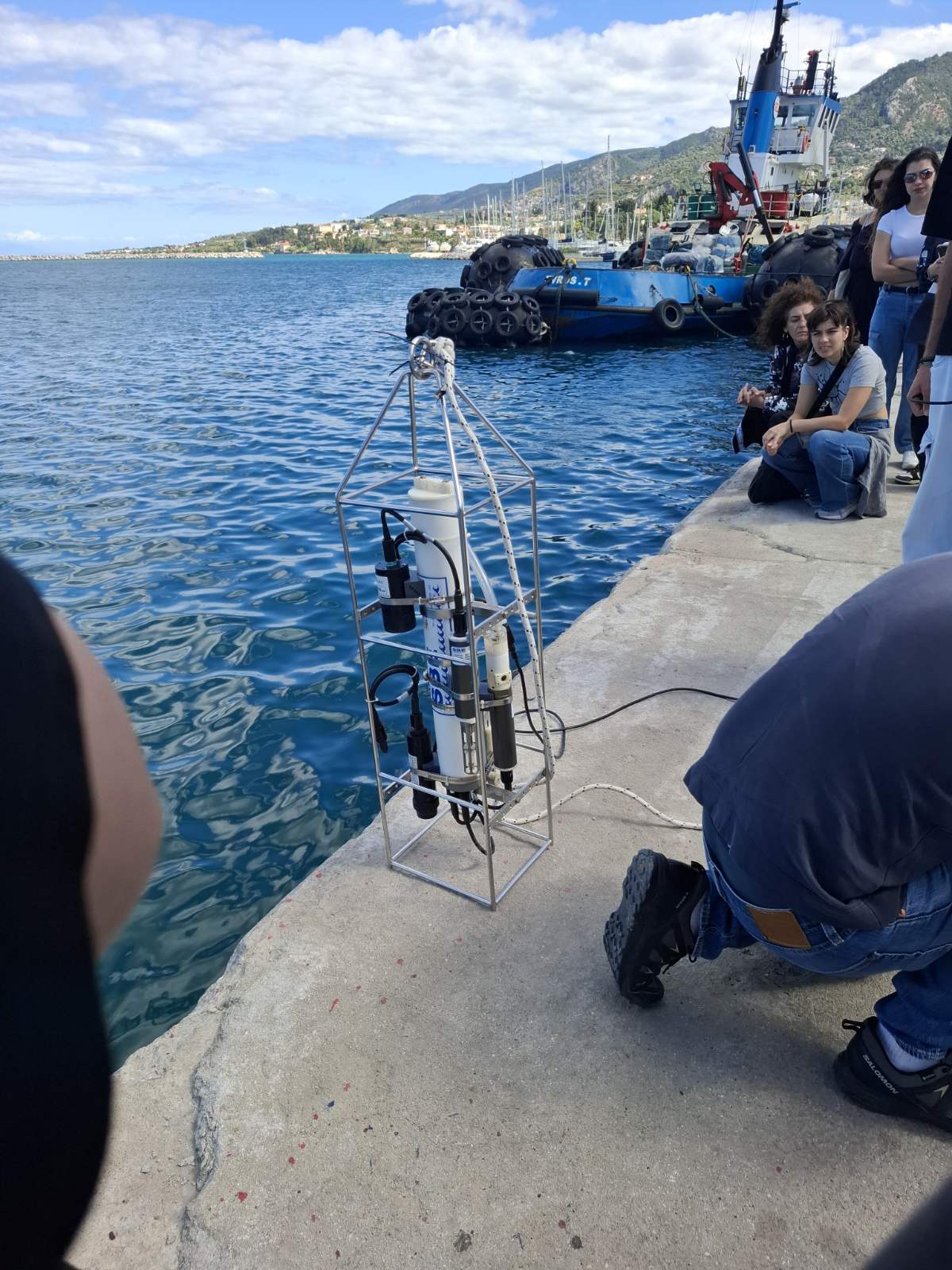
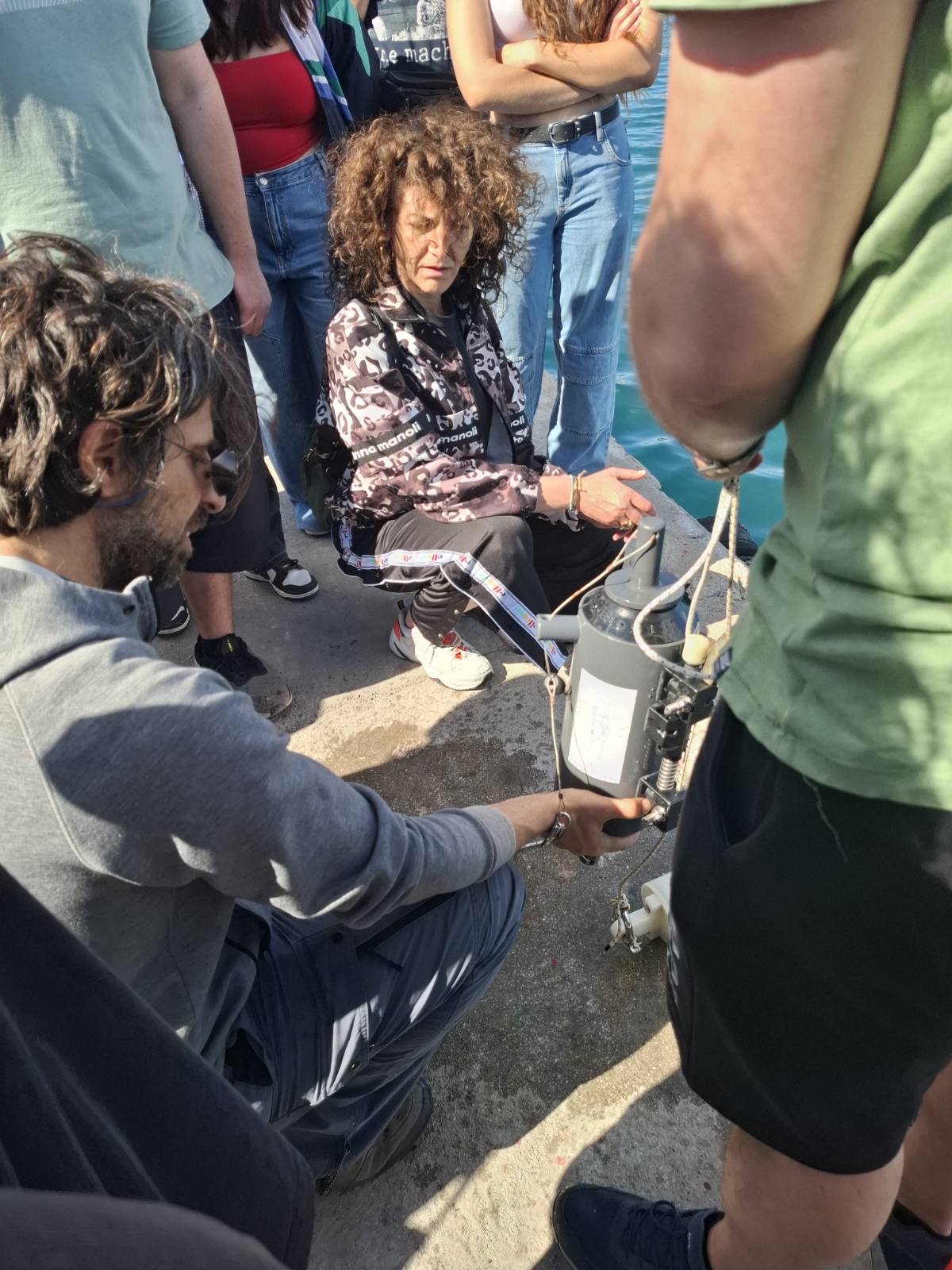
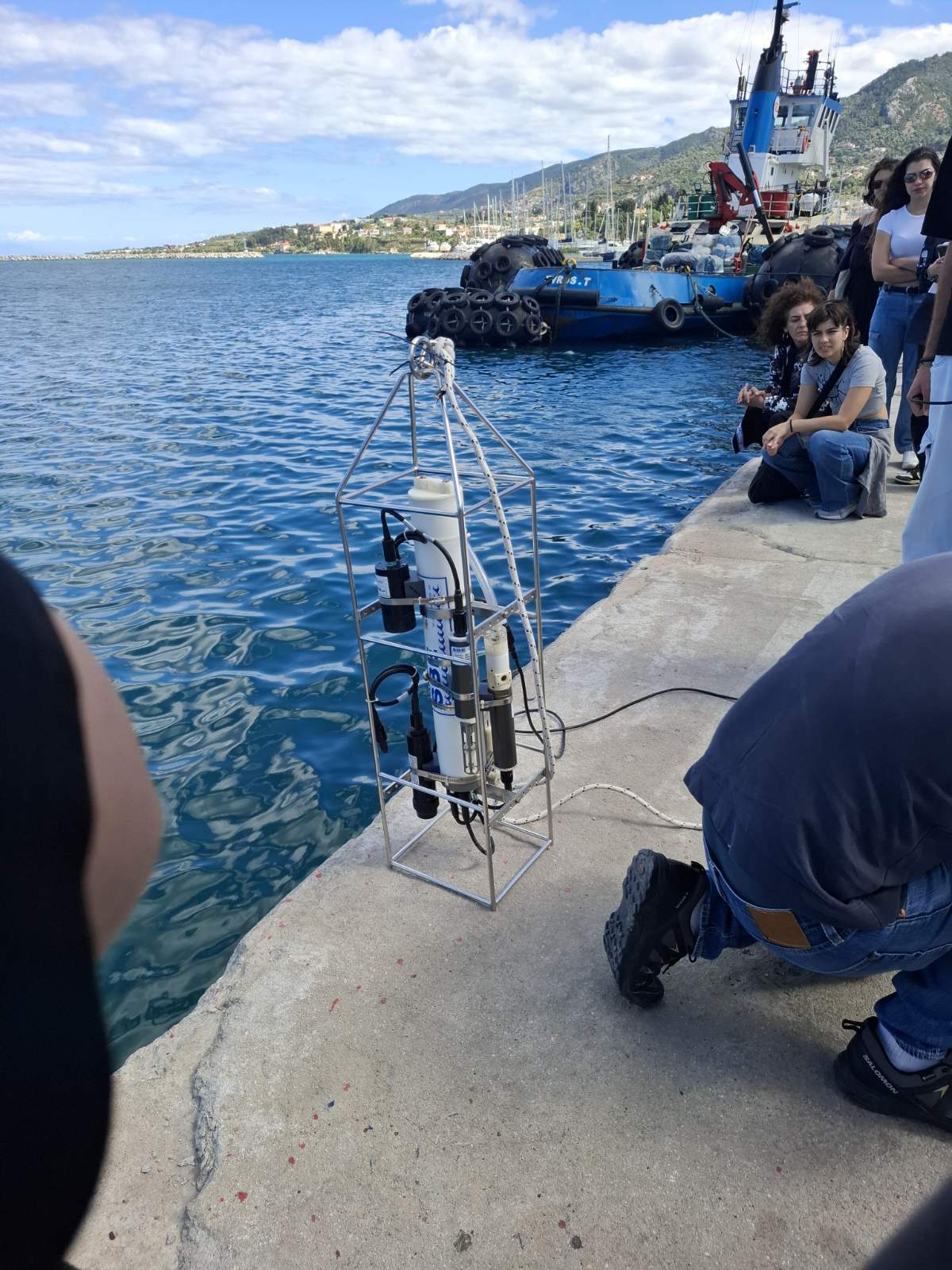
Members of the mission of the University of the Aegean working on the diving boat “ELPIDA”. There are two instruments for measuring temperature, conductivity and water pressure, with additional sensors of oxygen, chlorophyll and turbidity, a drifting surface float (drifter) as well as filtration work to record chlorophyll.
To meet the implementation needs of this very ambitious project, the Laboratory has developed a new methodology for observing anthropogenic mixing from ships, while investing in the use of a three-dimensional ecological / biogeochemical model.
The project AEGIS refers to the enhancement of infrastructure capacity funded by the North Aegean 2014-2020 Regional Operational Program, co-financed by 80% of the European Union’s Structural Funds, European Regional Development Fund (ERDF) and European Social Fund (ESF). The project aims in boosting the research capacity of the Department of Marine Sciences, improving its ability to contribute to Blue Growth in the North Aegean. In the framework of the project, a Coastal Environmental Observatory is inaugurated, equipped with modern scientific equipment for the continuous monitoring of the Bay of Kalloni, the capability of access to various N. Aegean coasts, and the operational forecasting of sea state. The Hellenic Centre for Marine Research and the National Centre for Scientific Research Demokritos will contribute and collaborate to the AEGIS observatory.
This project was funded by the North Aegean Region in the framework of the “North Aegean 2014-2020 Operational Programme” and aimed to boosting the capacity of the Department of Marine Sciences to support Blue Growth in the North Aegean via the development of the Coastal Environmental Observatory AEGIS, in accordance to the Research and Innovation Strategies for Smart Specialisation (RIS3). The Observatory provides high-quality services like:
Support for the development and operation of diving centres and submarine tourist routes.
Support for the submission process for declaration of local marine produce as Products of Designation of Origin or Protected Geographical Indication.
Direct intervention in coastal environmental crises (such as toxic algal blooms, monitoring of natural disasters, etc.)
Provision of environmental monitoring and environmental footprint assessment services, as well as coastal environmental impact assessment services, as required by the European Marine Strategy Framework Directive (2008/56/EC) and national (i.e. SGN 3983/2011) legislation.
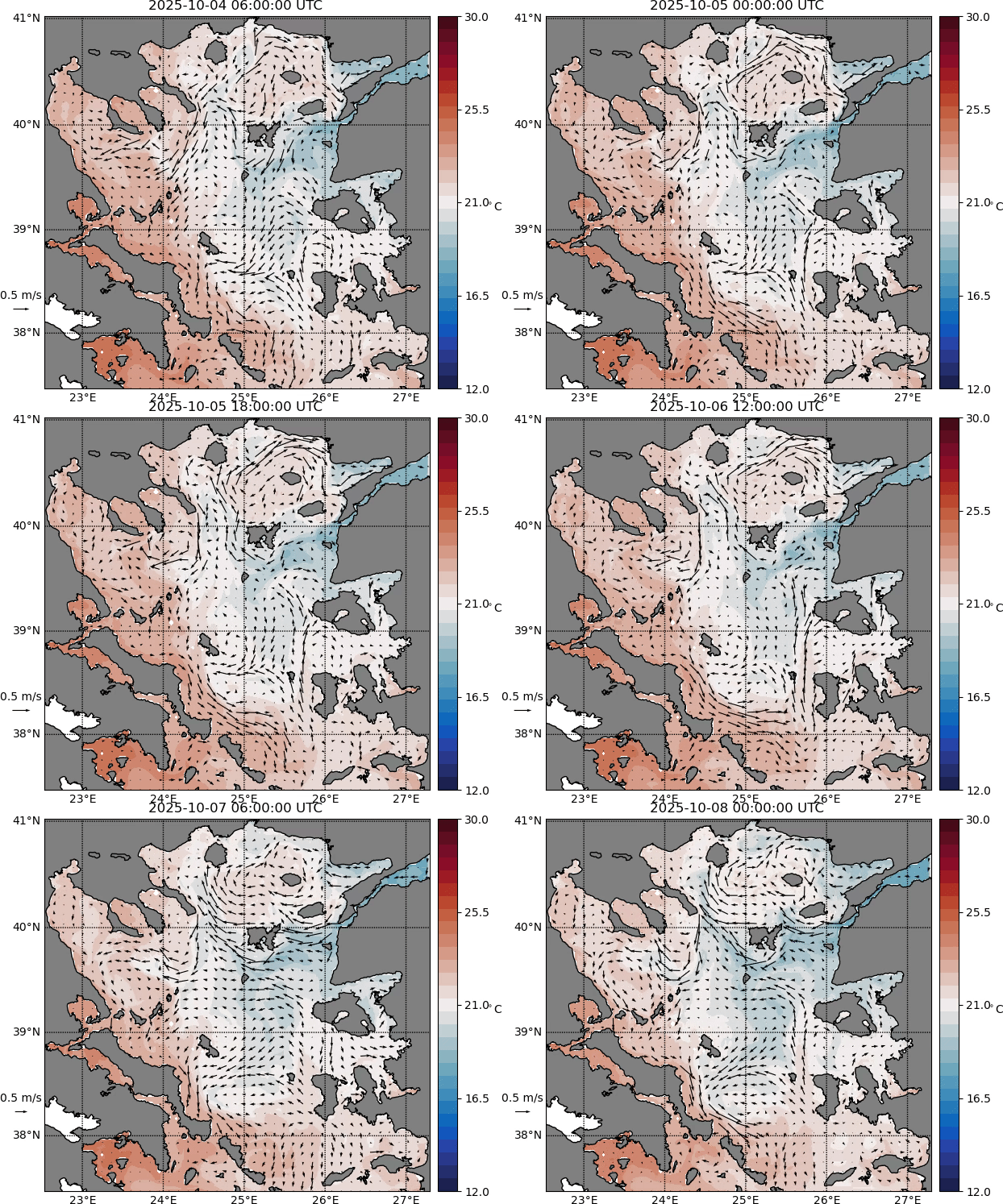
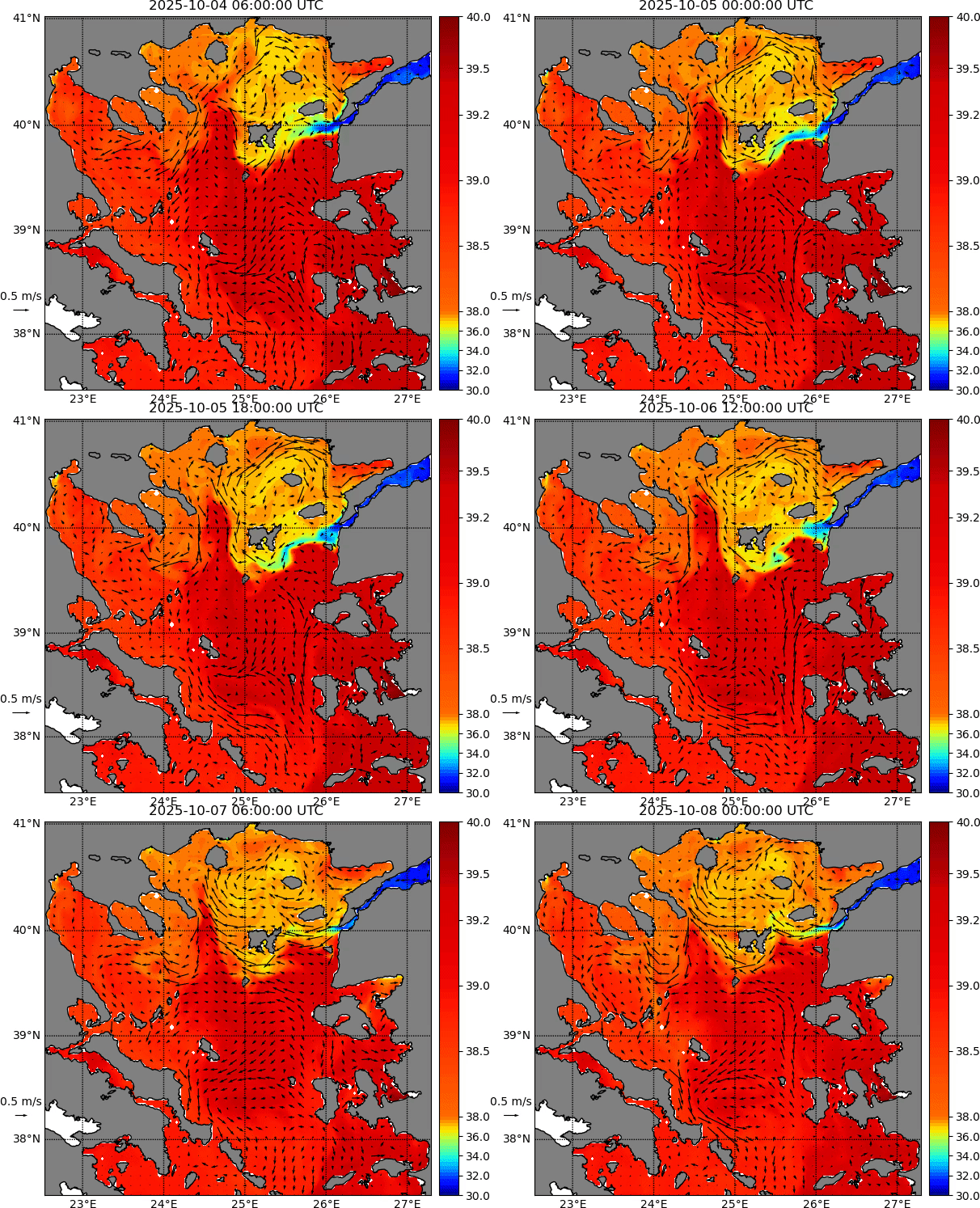
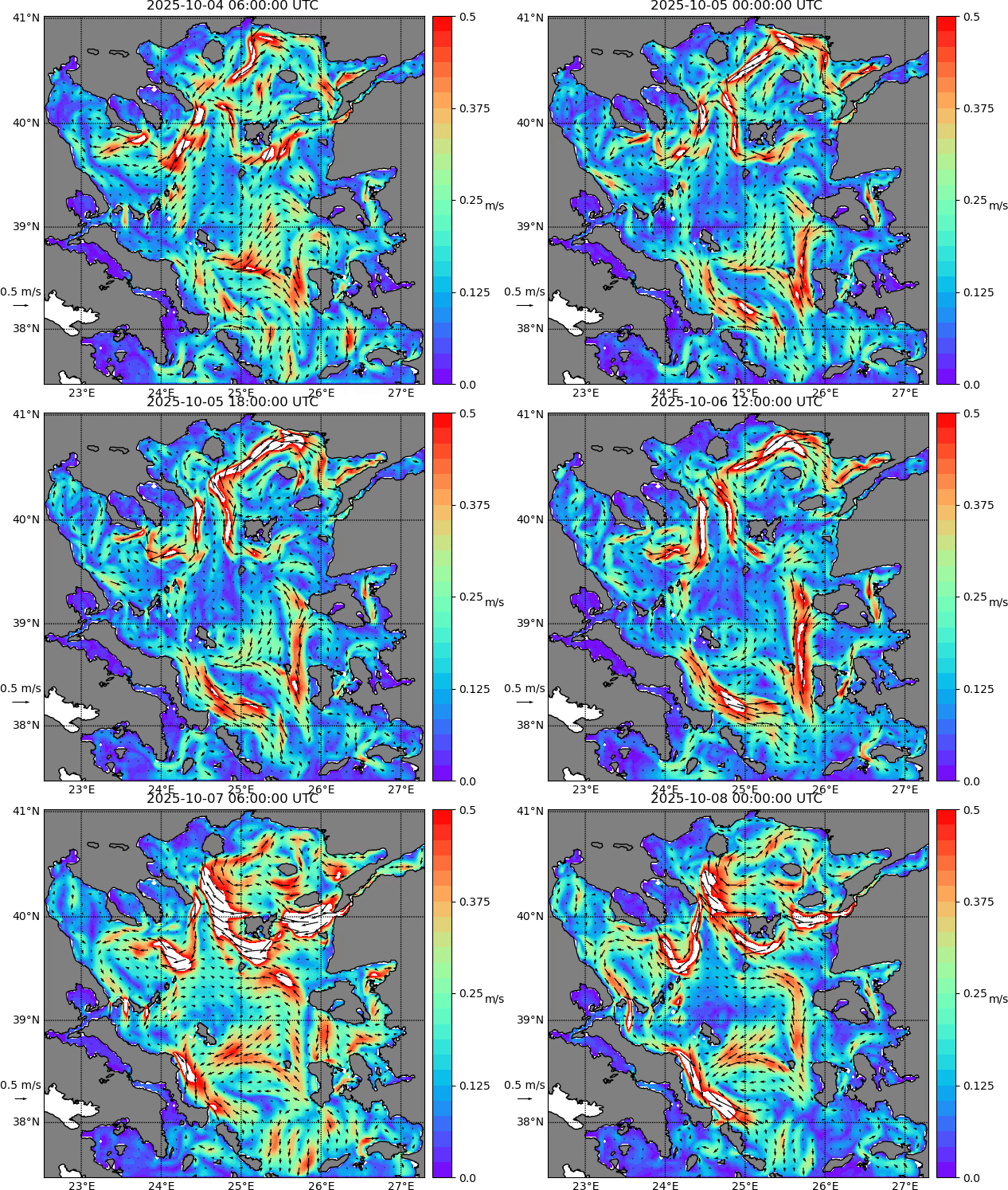
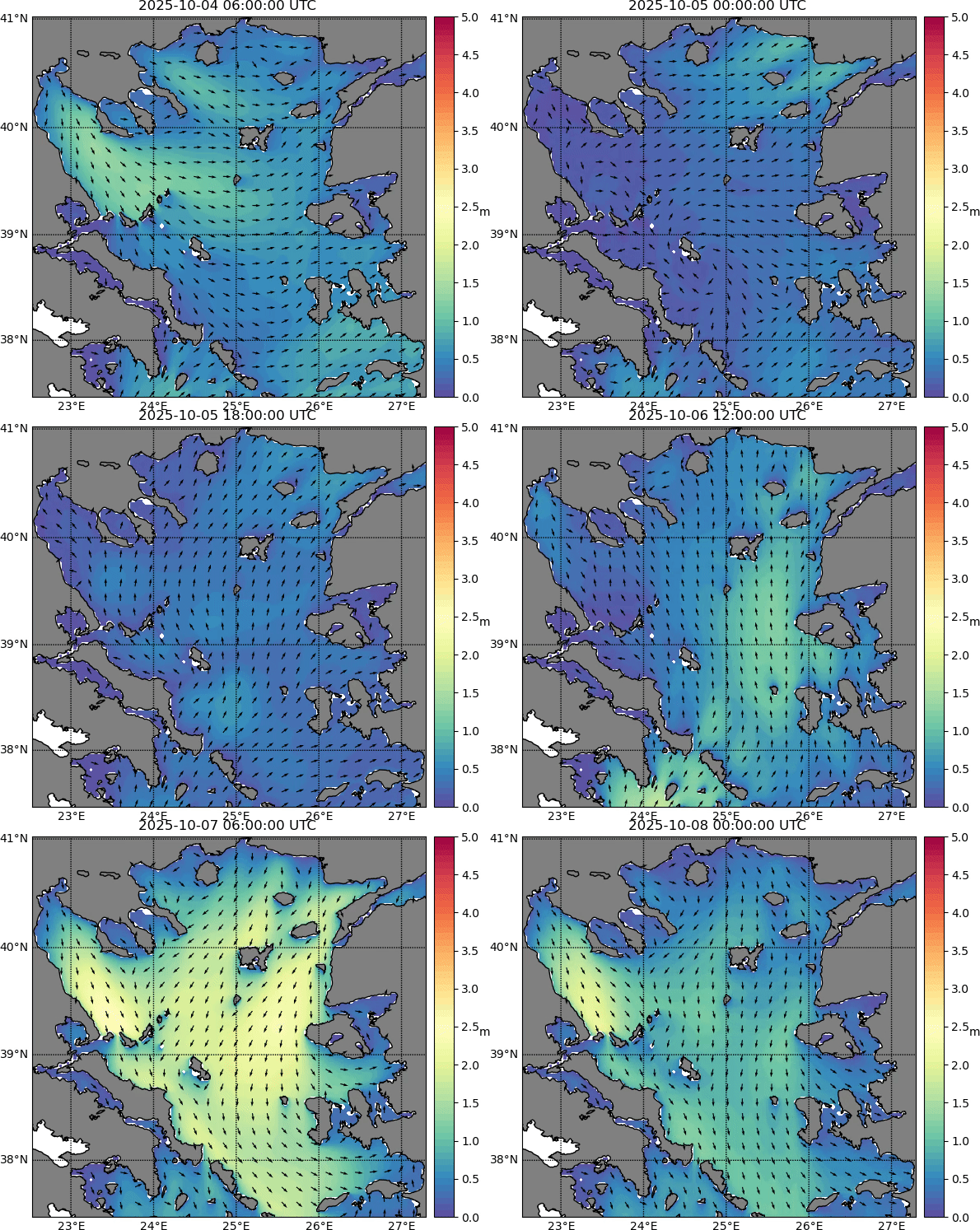
Provision of high-quality operational forecasts of the marine conditions (temperature, salinity, currents) for the public through the web-page of the Department of Marine Sciences and the Poseidon System (HCMR).
Support for infrastructure planning studies (for example dams, coastal defense constructions).
Contribution to Civil Protection in emergencies (as in floods).
Contribution to actions for coastal protection from pollution, as well as Search and Rescue operations.
Τhe project “Infrastructure development for supporting Blue Growth in the North Aegean: AEGIS Coastal Environmental Observatory“, was funded by the North Aegean Prefecture through contract MIS 5021550 of the Operational Programme «North Aegean 2014-2020»
Mobile Observatory consisting of a mobile laboratory in a specially-equipped van for the preliminary processing, conservation and safe transport of field samples, a inflatable sppedboat and the necessary equipment for fast responding to requests for field sampling (for example for mapping tourist diving routes) throughout the North Aegean Sea.
Remote Sensing – Beach Protection. A complementing component to the mobile observatory, aims to the analysis and use of information from Earth-Observaing satellites, autonomous aerial vehicles (drones) and land-based networks of high-resolution observation of coastal morphdynamics and hydrodynamics, producing in short term information of large spatial coverage, thus reductng effort and cost of future environmental impact assessment studies required by the related legislation (e.g. E.U. Directive 2014/52/ΕC).
Data Quality Assurance and Control Laboratory. Complements older DMS infrastructures for the support of field studies and the production og high-quality reference measurements, enabling the monitoring of important Climate Change-related variability, such as marine and coastal acidification.
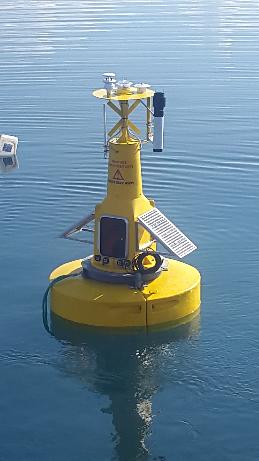
Infrastructure of Continuous Monitoring. Consists of a mobile environmental observatory consisting of an array of sensors providing in real time continuous oceanographic, meteorological and environmental (e.g. radiological) information to the public. The array consists of a mooring, currently deployed in the center of Kalloni Gulf (which may be moved upon request) and two sea-level gauges at Kalloni and Gera bays.
Marine conditions and circulation forecasting. Based on the current DMS knowhow in marine simulations, high-quality operational forecasting of coastal conditions will be offered. Tools for the assessment of the dispersion of pollutants or floating materias will be provided for the support of coastal pollution protection, search and rescue operations, etc..
Communication and Training Office. The communication of the AEGIS Observatory with the public and organizations will take placve through a specialized structure for the interaction with potential users and the conversion of the provided products and services to meet user needs.
The AEGIS project is currently implemented, as the material equipment provisions are being completed and the personnel selection process finalized. Most of the instruments have been acquired and we are progressing now to the stage of developing operation and quality control protocolls. Below, some pictures of the new equipment are provided:
The project HIMIOFoTS requires the cooperation of a total of 10 greek Academic and Research organizations. Our Laboratory will repair and upgrade the “Dardanos” HF radar system, for the continuous monitoring of the Black Sea water inflow into the Mediterranean and the Aegean Sea.
The Hellenic Integrated Monitoring, Innovation and Operational Forecasting of Seas and Internal Waters (HIMIOFoTS), is a National Infrastructure project coordinated by the Hellenic Centre for Marine Research (HCMR), in which take part 12 Greek academic and research insitutions.
The contribution of the Laboratory of Physical and Chemical Oceanography to the HIMIOFoTS project concerns the repair and upgrade of the system DARDANOS, and its integration to the HIMIOFoTS infrastructure.
The DARDANOS system is s HF radar of the WERA type, by Helzel Messtechnik GmbH.
The project ENIRISST consitutes a National Infrastructure regarding shipping, transport and logistics, as well as their interactions with the environment. In the framework of this project, the Department of Marine Sciences of the University of the Aegean, in collaboration with the Hellenic Centre for Marine Research, have undertaken the implementation of the platform EcoMarine, hosting information services regarding Marine Protected Areas, marine pollution around Greece, ship-related polluting activities and calculators, interactions of shipping and marine research, as well as legislation related to the Marine Environment.
A bilateral Greek-German research project, between Justus-Liebig-University Giessen, University of the Aegean and the Hellenic Centre for Marine Research, funded by the State Scholarships Foundation for the Greek partners. The project refers to the study of Marine Heat Waves, its impacts on the marine ecosystems, and its relation to air-sea interactions in the Eastern Mediterranean Sea.
To έργο “Θαλάσσιοι καύσωνες στην Ανατολική Μεσόγειο: Θαλάσσιες αποκρίσεις στην ατμοσφαιρική διέγερση και επιπτώσεις στα θαλάσσια οικοσυστήματα (EM-MHeatWaves)” υλοποιείται στα πλαίσια του Επιχειρησιακού Προγράμματος “Ανταγωνιστικότητα, Επιχειρηματικότητα & Καινοτομία” (ΕΣΠΑ 2014-2020) με συγχρηματοδότηση της Ελληνικής Κυβέρνησης (Υπουργείο Ανάπτυξης και Επενδύσεων) και της Ευρωπαϊκής Ένωσης (Ευρωπαϊκού Ταμείου Περιφερειακής Ανάπτυξης, Ταμείου Συνοχής).
The project aims to make the Gulf of Kalloni (in combination with the AEGIS project) the best-managed coastal area in Greece. In the framework of the project, high-quality numerical simulations of the marine circulation and waves, using both atmospheric and tidal forcing. Furthermore, extended fieldwork is planned, together with the use of a submarine telephone cable -for the first time in the Mediterranean- for continuous monitoring of the water exchanges between the Gulf and the open sea. The oceanographic research group led by prof. Ayal Anis from the Texas A&M University (U.S.A.) is collaborating to the project.
The project “Kalloni Model” aims to develop a model system for studying the circulation and functioning of Gulfs typical to the Greek coasts. The project’s target is to set the basis so that, in combination with other research initiatives of the Laboratory of Physical and Chemical Oceanography, and the Department of Marine Sciences in general, the Kalloni Gulf will become the best managed coastal system in Greece.
Specific innovations employed within the “Kalloni Model” project are the following:
Utilization of a submarine telephone cable -for the first time in the Mediterranean- to assess as well as continuously monitor water exchanges between the Gulf and the open Sea.
Inclusion of high-frequency processes (such as tidal forcing and wave-current interactions) in the numerical simulations of the Gulf’s circulation and functioning.
Calibration of the submarine-cable method using towed and moored Acoustic Doppler Current Profiler for the estimation of the exchanges, as well as via closing the volume budget of the basin.
Monitoring of the circulation using drifters to compare with the numerically simulated fields.
Since mid-May 2019, extended field campaigns have been conducted in and out of Kalloni Bay, including:
Oceanographic transects along the Strait to study the dynamics of exchange and mixing between the Bay and open Sea waters.
Transects across the Strait to quantify the water exchange and thus calibrate the submarine telephone cable measurements.
Wave measurements at two selected locations in the Bay.
Three oceanographic moorings (carrying Texas A&M University instruments) deployed in the Bay, providing the variability of currents and temperature n the Gulf.
Meteorological and solar and infrared radiation measurements.
Concurrently, the voltage difference between the coasts of Nyphida and Apotheka is recorded, in order to be converted to water volume flux values.

Figure1. Distribution of temperature, salinity, density, chl-α and turbudity along the Strait
in May 2019.
The distribution of verious hydrographic parameters on a transect along the Strait is shown in fig.1, revealing that during that period the basin behaves as a dilution basin, and that intensive mixing takes place at the southern end of the Strait (where the bethymetric through narrows and the flow accelerates).
The project “Kalloni Model”, albeit especially ambitious byitself, is part of a larger-scale plan of the Department of Marine Sciences to make Kalloni Gulf a model for Coastal Management and the focus of Coastal and Marine Research and Education.
This research is co-financed by Greece and the European Union (European Social Fund- ESF) through the Operational Programme «Human Resources Development, Education and Lifelong Learning 2014-2020» in the context of the project “Model Oceanographic System for the monitoring of Kalloni Gulf (Model Kalloni)” (MIS 5004239). We are also grateful to the management and the personnel of the COSMOTE Group of Companies for their support fothe project.

This research project is held in the framework of the Greek-French bilateral programme ‘PLATO’, aiming to develop and assess a new drifter specially designed for the quality control of HF radar surface current measurements.
The project is funded by the ‘THALES’ programme and has been assigned to the Hellenic Centre for Marine Research (HCMR). The Department of Marine Sciences (DMS) plays an important role in all the project’s components and has been instrumental in the submission of the research proposal.
The project is funded by the ‘THALES’ programme and has been assigned to the Aristotle University of Thessaloniki. The Department of Marine Sciences (DMS) plays an important role in providing the sea-level rise projections to various Greek coastal areas.
Project funded by the General Secretariat for Research and Technology (GSRT) in the framework of the Hellenic Research Infrastructures ESFRI. The DMS has undertaken subcontracting assigned by the HCMR referring to the quality control and processing of the hydrographic observations of the deployed ARGO floats.
European Integrated Project funded by the 7th Framework Programme; DMS has a small contribution regarding data analysis and mixing simulations in the deep basins of the North Aegean.
The project, funded by the MED programme, referred to improvements of the response to marine pollution and accident episodes through the incorporation of novel oceanographic practices and instruments (mainly HF radars, CODE-type drifters and oil-spill drifters).
The project, funded by the MarinERA programme, aimed to investigate the decadal variability of the Mediterranean through bridging the gaps between instrumental and paleoceanographic observations and numerical simulations.
| The project, funded by the MarinERA programme, aimed to investigate the role of exchanges between the Mediterranean and its adjacent basins, the Atlantic and Black Seas, in the dynamics and ecosystem characteristics in the vicinity of the connecting Straits. |
The project was funded by the GSRT in order to prepare the ground for the Greek participation in the European Research Infrastructure of Multidisciplinary Seabed Observing Systems.
The project was funded by the GSRT in order to prepare the ground for the Greek participation in the European Research Infrastructure Euro-ARGO.
European Integrated Project funded by the 6th Framework Programme, where the DMS role was to analyze field observations and perform a Lagrangian experiment in the North Aegean.
The project was funded by the Greece-Cyprus INTERREG-IIIA programme, aiming to develop a system to aid the planning of aquaculture parks
The project was funded in the framework of the Eastern Macedonia-Thrace Operational Programme 2000-2006 and referred to the development of tools for coastal protection from oil-spills in the prospect of the construction of the Burgas-Alexandroupolis pipeline.
The project was funded by the Interreg-ARCHIMED programme the role of the marine natural processes group was the installation of a coastal HF radar for monitoring the sea-surface currents east of Lemnos island.
Service / study for Common Seas CIC in the frame of the network of island communities Clean Blue Alliance
Service / study to the Ministry of the Environment and Climate Change under the coordination of APC Advisors S.A., for the application of the Framework Directive 2008/56/ΕΚ for Marine Strategy
Service / study for the aquaculture enterprises of the islands of Chios and Oinousses in the framework of the application of the Hellenic Government’s common circular number 121570/1866/12.06.2009
Service / study for the aquaculture enterprises of the island of Lesvos in the framework of the application of the Hellenic Governments common circular number 121570/1866/12.06.2009
Oceanographic study ordered by the Evros prefecture under the prospect of the then- planned construction of the Burgas – Alexandroupolis oil pipeline
Advising service to the Norwegian oceanographic company Fugro-Oceanor, undertaker of the POSEIDON-ΙΙ project by the HCMR. Our main contribution has been the design of the HCMRs oceanographic calibration laboratory in its premises at the island of Crete
Velaoras, D., Kioroglou, S., Bourma, E., Ballas, D., Zervakis, V., 2025. Evidence of thermohaline staircase in the Cretan Sea (Eastern Mediterranean Sea). Frontiers in Marine Science, 12, https://doi.org/10.3389/fmars.2025.1649311.
Androulidakis, Y., Makris, C., Kolovoyiannis, V., Kombiadou, K., Krestenitis, Y., Kartsios, S., … Mallios, Z. (2025). Operational platform for metocean forecasts in Thermaikos Gulf (Aegean Sea, Greece). Journal of Operational Oceanography, 1–27. https://doi.org/10.1080/1755876X.2025.2503569
Zervakis, V., Kolovoyiannis, V., Calgaro, L., Giubilato, E., Marcomini, A., Mazioti, A.-A., Ferrarin, C., Majamäki, E., Potiris, M., Krasakopoulou, E., Tragou, E., Kukkonen, J., Jalkanen, J.-P., 2025. A novel method to assess the dilution of complex mixtures in the marine environment: Application to marine scrubber water effluents. Marine Pollution Bulletin 216, 117956. https://doi.org/10.1016/j.marpolbul.2025.117956
Androulidakis, Y., and Pytharoulis, I., 2025. Variability of marine heatwaves and atmospheric cyclones in the Mediterranean Sea during the last four decades. Environmental Research Letters. https://doi.org/10.1088/1748-9326/adb505
Aghito, M., Majamäki, E., Hänninen, R., Lunde Hermansson, A., Hassellöv, I.-M., Ytreberg, E., Kolovoyiannis, V., Zervakis, V., Granberg, M., Moldanová, J., Dagestad, K.-F., Breivik, Ø., Hole, L. R., Jalkanen, J.,-P., 2025. Projected changes of the emission and transport of organic pollutants and metals from shipping in European seas 2018–2050. Marine Pollution Bulletin, 211, 117351.
https://doi.org/10.1016/j.marpolbul.2024.117351.
Androulidakis, Y., Kolovoyiannis, V., Makris, C., & Krestenitis, Y., 2024. Evidence of 2024 Summer as the Warmest During the Last Four Decades in the Aegean, Ionian, and Cretan Seas. Journal of Marine Science and Engineering, 12(11), 2020. https://doi.org/10.3390/jmse12112020
Schroeder K., Azzurro E., Briand F., Rilov G., Simon A., Garrabou J., Juza M., Androulidakis Y., Ličer M., Schlegel R., Chartosia N., Besiktepe S., B. Mohamed., Liguori G. and Ghanem R. 2024. Marine heatwaves in the Mediterranean Sea and beyond – An overview. pp 5 – 24 In CIESM Monograph 51 [F. Briand, ed.] CIESM Publisher, Paris, Monaco, 174 p. https://www.ciesm.org/catalog/index.php?article=1051
Tsabaris, C., Kousidou, G., Androulakaki, E.G., Patiris, D.L., Pappa, F.K., Marmara, D., Krasakopoulou, E., 2024. Reconstruction of radioactivity and microplastic particles studying sedimentation/accumulation in the deep Lemnos basin, North Aegean Sea, Greece. J Soils Sediments. https://doi.org/10.1007/s11368-024-03907-6
Potiris M., Mamoutos I.G., Tragou E., Zervakis V., Kassis D, Ballas D., 2024. Dense Water Formation Variability in the Aegean Sea from 1947 to 2023. Oceans; 5(3):611-636. https://www.mdpi.com/2673-1924/5/3/35
Mamoutos, I. G., Potiris, E., Androulidakis, Y., Tragou, E., & Zervakis, V., 2024. Evidence for reduced Black Sea water outflow to the North Aegean. Earth and Space Science, 11, e2024EA003674. https://doi.org/10.1029/2024EA003674
Kontoyiannis, H., Pratt, L.J., Zervakis, V., Alford, M.H., Sofianos, S., Theocharis, A., 2024. Current and density observations on a flow through a contraction and over a bottom elevation at the southern edge of the Cycladic Plateau in the Aegean Sea – East Mediterranean. Dynamics of Atmospheres and Oceans, 106, 101460. https://doi.org/10.1016/j.dynatmoce.2024.101460.
Mazioti, A.A., Kolovoyiannis, V., Krasakopoulou, E., Tragou, E., Zervakis, V., Assimakopoulou, G., Athiniotis, A., Paraskevopoulou, V., Pavlidou, A., Zeri, C., 2024. Implementation of a Far-Field Water Quality Model for the Simulation of Trace Elements in an Eastern Mediterranean Coastal Embayment Receiving High Anthropogenic Pressure. Journal of Marine Science and Engineering; 12(5):797. https://doi.org/10.3390/jmse12050797
Androulidakis, Y., Makris, C., Kombiadou, K., Krestenitis, Y., Stefanidou, N., Antoniadou, C., Krasakopoulou, E., Kalatzi, M., Baltikas, V., Chintiroglou, C.C., 2024. Oceanographic Research in the Thermaikos Gulf: A Review over Five Decades. Journal of Marine Science and Engineering, 12(5), 795. https://doi.org/10.3390/jmse12050795
Krestenitis, M., Androulidakis, Y. and Krestenitis, Y., 2024. Deep learning-based forecasting of sea surface temperature in the interim future: application over the Aegean, Ionian, and Cretan Seas (NE Mediterranean Sea). Ocean Dynamics, 74(2), pp.149-168. https://doi.org/10.1007/s10236-023-01595-3
Frangoulis, C., Stamataki, N., Pettas, M., Michelinakis, S., King, A.L., Giannoudi, L., Tsiaras, K., Christodoulaki, S., Seppälä, J., Thyssen, M., Borges, A.V., Krasakopoulou, E., 2024. A carbonate system time series in the Eastern Mediterranean Sea. Two years of high-frequency in-situ observations and remote sensing. Frontiers in Marine Science, 11, 1348161. https://doi.org/10.3389/fmars.2024.1348161
Marmara, D., Brundo, M.V., Pecoraro, R., Scalisi, E. M., Contino, M., Sica, C., Ferruggia, G., Indelicato, S., Velardita, R., Tiralongo, F., Krasakopoulou, E., 2024. Plastic additives in commercial fish of Aegean and Ionian Seas and potential hazard to human health. Frontiers in Marine Science, 11, 1334237. https://doi.org/10.3389/fmars.2024.1334237
Potiris, M., Mamoutos, I.G., Tragou, E., Zervakis, V., Kassis D, Ballas D., 2024. Dense Water Formation in the North–Central Aegean Sea during Winter 2021–2022. Journal of Marine Science and Engineering; 12(2):221. https://doi.org/10.3390/jmse12/2/221
Papadakis, O.; Mamoutos, I.; Ramfos, A.; Catanese, G.; Papadimitriou, E.; Theodorou A., J.; Batargias, C.; Papaioannou, C.; Kamilari, M.; Tragou, E.; Zervakis, V.; Katsanevakis, S., 2023. Status, Distribution, and Threats of the Last Surviving Fan Mussel Populations in Greece. Medit. Mar. Sci., 24, 679-708. https://ejournals.epublishing.ekt.gr/index.php/hcmr-med-mar-sc/article/view/35384
Androulidakis, Y., Makris, C., Kolovoyiannis, V., Krestenitis, Y., Baltikas, V., Mallios, Z., Pytharoulis, I, Topouzelis, K., Spondylidis, S., Tegoulias, I., Kontos, Y., 2023. Hydrography of Northern Thermaikos Gulf based on an integrated observational-modeling approach. Cont. Shelf Res., 105141. https://doi.org/10.1016/j.csr.2023.105141.
Androulidakis, Y., Makris, C., Mallios, Z., and Krestenitis, Y., 2023. Sea level variability and coastal inundation over the northeastern Mediterranean Sea. Coastal Engineering Journal, 65(4), 514-545.
Marmara, D., Katsanevakis, S., Brundo, M., Tiralongo, F., Ignoto, S., Krasakopoulou, E., 2023. Microplastics ingestion by marine fauna with a particular focus on commercial species: A systematic review. Frontiers in Marine Science, 10, 1240969. https://doi.org/10.3389/fmars.2023.1240969
Digka, N., Patsiou, D., Kaberi, H., Krasakopoulou, E., Tsangaris, C., 2023. Microplastic ingestion and its effects οn sea urchin Paracentrotus lividus: A field study in a coastal East Mediterranean environment. Mar Pollut Bull. 196, 115613. https://doi.org/10.1016/j.marpolbul.2023.115613
Kontoyiannis, H., Pavlidou, A., Zeri, C., Krasakopoulou, E., Simboura, N., Hatzianestis, I., Papadopoulos, V., Rousselaki, E., Assimakopoulou, G., Siokou, I., 2023. Thirty years of a bottom oxygen depletion-renewal cycle in the coastal yet deep environment of the West Saronikos Gulf (Greece): Its drivers and the impact on the benthic communities. Science of The Total Environment, 166025. https://doi.org/10.1016/j.scitotenv.2023.166025
Tsabaris, C.; Zervakis, V.; Saitanis, S.; Patiris, D.; Pappa, F.K.; Velegrakis, A.; Alexakis, S.; Kioroglou, S. In Situ Radioactivity Measurements and Water Flow Characteristics of a Thermal Spring in Gera Gulf, Lesvos Island, Greece. J. Mar. Sci. Eng. 2023, 11, 801. https://doi.org/10.3390/jmse11040801
Tsiola, A., Krasakopoulou, E., Daffonchio, D., Frangoulis, C., Tsagaraki, T.M., Fodelianakis, S., Pitta, P., 2023. Responses of Free-Living Planktonic Bacterial Communities to Experimental Acidification and Warming. Microorganisms 11, 273. https://doi.org/10.3390/microorganisms11020273
Strogyloudi, E., Krasakopoulou, E., Giannakourou, A., Galinou-Mitsoudi, S., Catsiki, V.A., Drakopoulou, P., Kyriakidou, C., Papathanassiou, E., Angelidis, M., 2023. How environmental factors determine mussel metal concentrations? A comparative study between areas facing different pressures. Regional Studies in Marine Science 59, 102806, https://doi.org/10.1016/j.rsma.2022.102806
Androulidakis, Y., Makris, C., Mallios, Z. et al. Storm surges and coastal inundation during extreme events in the Mediterranean Sea: the IANOS Medicane. Nat Hazards(2023). https://doi.org/10.1007/s11069-023-05890-6
Petalas, S.; Tragou, E.; Mamoutos, I.G.; Zervakis, V. Simulating the Interconnected Eastern Mediterranean–Black Sea System on Climatic Timescales: A 30-Year Realistic Hindcast. J. Mar. Sci. Eng. 2022, 10, 1786. https://doi.org/10.3390/jmse10111786
Hassoun A.E.R., Bantelman A., Canu D., Comeau S., Galdies C., Gattuso J.-P., Giani M., Grelaud M., Hendriks I.E., Ibello V., Idrissi M., Krasakopoulou E., Shaltout N., Solidoro C., Swarzenski P.W., Ziveri P., 2022. Ocean acidification research in the Mediterranean Sea: Status, trends and next steps. Front. Mar. Sci. 9, 892670. https://www.frontiersin.org/articles/10.3389/fmars.2022.892670/full
Androulidakis, Y.; Kourafalou, V. Marine Heat Waves over Natural and Urban Coastal Environments of South Florida. Water 2022, 14(23), 3840; https://doi.org/10.3390/w14233840.
Androulidakis, Y. S., Krestenitis, Y. N., 2022. Sea surface temperature variability and marine heat waves over the Aegean, Ionian, and Cretan Seas from 2008–2021. Journal of Marine Science and Engineering, 10(1), 42.
Leivadaros, P.; Tsabaris, C.; Patiris, D.L.; Eleftheriou, G.; Pappa, F.K.; Androulakaki, E.; Dasenakis, M.; Krasakopoulou, E.; Zervakis, V. Recent 137Cs Distribution in the Aegean Sea, Greece. J. Mar. Sci. Eng. 2022, 10, 1719. https://doi.org/10.3390/jmse10111719
Bourma, E., Perivoliotis, L., Petihakis, G., Korres, G., Frangoulis, C., Ballas, D., Zervakis, V., Tragou, E., Katsafados, P., Spyrou, C., Dassenakis, M., Poulos, S., Megalofonou, P., Sofianos, S., Paramana, Th., Katsaounis, G., Karditsa, Ai., Petrakis, S., Mavropoulou, A.-M., Paraskevopoulou, V., Milatou, N., Pagonis, P., Velanas, S., Ntoumas, M., Mamoutos, I., Pettas, M, Christodoulaki, S., Kassis, D., Sotiropoulou, M., Mavroudi, A., Moira, A., Denaxa, D., Anastasopoulou, G., Potiris, E., Kolovogiannis, V., Dimitrakopoulos, A.-A., Petalas, S., Zissis, N., 2022. The Hellenic Marine Observing, Forecasting and Technology System—An Integrated Infrastructure for Marine Research. Journal of Marine Science and Engineering, 10, 329. https://doi.org/10.3390/jmse10030329
Aslam, S., Tzoraki, O., Krasakopoulou, E., 2021. Anthropogenic litter in freshwater bodies and their estuaries: an empirical analysis in Lesvos, Greece. Environ Sci Pollut Res. https://doi.org/10.1007/s11356-021-16793-z
Souvermezoglou, E., Krasakopoulou, E., 2021. Temporal evolution of oxygen and nutrients in the NE Ionian Sea from 1987 to 2008 under the influence of the Cretan and Adriatic Seas. Progress in Oceanography 199, 102711. https://doi.org/10.1016/j.pocean.2021.102711
Mamoutos, I., Potiris, E., Tragou, E., Zervakis, V., Petalas, S., 2021. A High-Resolution Numerical Model of the North Aegean Sea aimed at Climatological Studies. Journal of Marine Science and Engineering, 9(12), 1463; https://doi.org/10.3390/jmse9121463
Sampatakaki, A., Zervakis, V., Mamoutos, I., Tragou, E., Gogou, A., Triantaphyllou, M., Skliris, N., 2021. Investigation of the Mediterranean Sea’s inherent variability under contrasting extreme climatic conditions. Frontiers in Marine Science, https://www.frontiersin.org/articles/10.3389/fmars.2021.656737/abstract
Chaniotaki, M., Kolovoyiannis, V., Tragou, E., Herold, L.A., Batjakas, I.E., Zervakis, V., 2021. Investigation of the response of the Aegean Sea to the Etesian wind forcing. Continental Shelf Research, 225, 104485. https://doi.org/10.1016/j.csr.2021.104485.
Tsabaris, C., Zervakis, V., Georga, H., Pappa, F.K., Alexakis, S., Krasakopoulou, E., Patiris, D.L., 2021.
In situ characterization using natural radio-tracers in a submarine freshwater spring, Kiveri, Greece. Journal of Environmental Radioactivity, 233, 106583. https://doi.org/10.1016/j.jenvrad.2021.106583.
Androulidakis, Y., Kolovoyiannis, V., Makris, C., Krestenitis, Y., Baltikas, V., Stefanidou, N., Chatziantoniou, A., Topouzelis, K., Moustaka-Gouni, M., 2021. Effects of ocean circulation on the eutrophication of a Mediterranean gulf with river inlets: The Northern Thermaikos Gulf, Continental Shelf Research, 221, 104416, https://doi.org/10.1016/j.csr.2021.104416.
D’Amario, B., Pérez, C., Grelaud, M., Pitta, P., Krasakopoulou, E., Ziveri, P.. 2020. Coccolithophore community response to ocean acidification and warming in the Eastern Mediterranean Sea: results from a mesocosm experiment. Scientific Reports 10, 12637 https://doi.org/10.1038/s41598-020-69519-5
Kapetanaki, N., Krasakopoulou, E., Stathopoulou, E., Dassenakis, M., Scoullos, M., 2020. Severe Coastal Hypoxia Interchange with Ocean Acidification: An Experimental Perturbation Study on Carbon and Nutrient Biogeochemistry. Journal of Marine Science and Engineering, 8, 462. https://doi.org/10.3390/jmse8060462
Varkitzi I., Psarra S., Assimakopoulou G., Pavlidou A., Krasakopoulou E., Velaoras D., Papathanassiou E., Pagou K., 2020. Phytoplankton dynamics and bloom formation in the oligotrophic Eastern Mediterranean: Field studies in the Aegean, Levantine and Ionian seas. Deep-Sea Research Part II: Topical Studies in Oceanography, 171, 104662. https://doi.org/10.1016/j.dsr2.2019.104662
Petalas, S., Mamoutos, I., Dimitrakopoulos, A.-A., Sampatakaki, A., and Zervakis, V., 2020. Developing a Pilot Operational Oceanography System for an Enclosed Basin. J. Mar. Sci. Eng., 8, 336, https://www.mdpi.com/2077-1312/8/5/336
Tsabaris, C., Kaberi, H., Pappa, F.K., Leivadaros, P., Delfanti, R., Krasakopoulou, E. and Zervakis, V., 2020. Vertical distribution and temporal trends of 137Cs at Lemnos and Cretan deep basins of the Aegean Sea, Greece. Deep Sea Research Part II: Topical Studies in Oceanography, 171, 104603, https://doi.org/10.1016/j.dsr2.2019.06.011.
Zervakis, V., Krauzig, N., Tragou, E. and Kunze, E., 2019. Estimating vertical mixing in the deep North Aegean Sea using Argo data corrected for conductivity sensor drift. Deep-Sea Research Part I: Oceanographic Research Papers, 154, 103144, https://doi.org/10.1016/j.dsr.2019.103144.
Potiris, M., Frangoulis, C., Kalampokis, A., Ntoumas, M., Pettas, M., Petihakis, G., and Zervakis, V., 2018. ADCP observations of migration patterns of zooplankton in the Cretan Sea. Ocean Science, 2, 783–800. doi:10.5194/os-14-783-2018.
Petihakis, G., Perivoliotis, L., Korres, G., Ballas, D., Frangoulis, C., Pagonis, P., Ntoumas, M., Pettas, M., Chalkiopoulos, A., Sotiropoulou, M., Bekiari, M., Kalampokis, A., Ravdas, M., Bourma, E., Christodoulaki, S., Zacharioudaki, A., Kassis, D., Potiris, E., Triantafyllou, G., Tsiaras, K., Krasakopoulou, E., Velanas, S., Zisis, N., 2018. An integrated open-coastal biogeochemistry, ecosystem and biodiversity observatory of the eastern Mediterranean – the Cretan Sea component of the POSEIDON system. Ocean Sci., 14, 1223-1245, https://doi.org/10.5194/os-14-1223-2018
Kapetanaki, N., Krasakopoulou, E., Stathopoulou, E., Pavlidou, A., Zervoudaki, S., Dassenakis, M., Scoullos, M., 2018. Simulation of Coastal Processes affecting pH with Impacts on Carbon and Nutrient Biogeochemistry. Mediterranean Marine Science, 19/2, 290-304. http://dx.doi.org/10.12681/mms.14439
Karageorgis, A.P., Kontoyiannis, H., Stavrakakis, S., Krasakopoulou, E., Gogou, A., Papadopoulos, A., Kanellopoulos, Th.D., Rousakis, G., Malinverno, E., Triantaphyllou, M.V., Lykousis, V., 2018. Particle dynamics and fluxes in canyons and open slopes of the southern Cretan margin (Eastern Mediterranean). Progress in Oceanography 169, 33-47 https://doi.org/10.1016/j.pocean.2017.12.009
Triantaphyllou, M.V., Baumann, K.-H., Karatsolis, B.-Th., Dimiza, M., Psarra, S., Skampa, E., Patoucheas, P., Vollmar, N., Koukousioura, O., Katsigera, A., Krasakopoulou, E., Nomikou, P., 2018. Coccolithophore community response along a natural CO2 gradient off Methana (SW Saronikos Gulf, Greece, NE Mediterranean). PLoS ONE , 13(7), e0200012. https://doi.org/10.1371/journal.pone.0200012
Zervoudaki, S., Krasakopoulou, E., Moutsopoulos, T., Protopapa, M., Marro, S., Gazeau, F., 2017. Copepod response to ocean acidification in a low nutrient-low chlorophyll environment in the NW Mediterranean Sea. Estuarine, Coastal and Shelf Science 186, 152-162. http://dx.doi.org/10.1016/j.ecss.2016.06.030
Krasakopoulou, E., Souvermezoglou, E., Goyet, C., 2017. Carbonate system parameters and anthropogenic CO2 in the North Aegean Sea during October 2013. Continental Shelf Research 149, 69-81. http://dx.doi.org/10.1016/j.csr.2017.04.002
Karageorgis, A.P., Drakopoulos, P.G., Psarra, S., Pagou, K., Krasakopoulou, E., Banks, A.C., Velaoras, D., Spyridakis, N., Papathanassiou, E., 2017. Particle characterization and composition in the NE Aegean Sea: combining optical methods and biogeochemical parameters. Continental Shelf Research. http://dx.doi.org/10.1016/j.csr.2017.03.008
Parinos, C., Gogou, A., Krasakopoulou, E., Lagaria, A., Giannakourou, A., Karageorgis, A.P., Psarra, S. (2017). Transparent Exopolymer Particles (TEP) in the NE Aegean Sea frontal area: Seasonal dynamics under the influence of Black Sea water. Continental Shelf Research, 149, 112-123. https://doi.org/10.1016/j.csr.2017.03.012
Tsompanoglou, K., Anagnostou, Ch., Krasakopoulou, E., Pagou, K., Karageorgis, A.P., Pavlidou, A., Albanakis, K., Tsirambides, A. (2017). Distribution and geochemical composition of suspended particulate material in the shallow embayment of Northern Thermaikos Gulf, Greece. Continental Shelf Research. https://doi.org/10.1016/j.csr.2017.05.002
Mamoutos, I., Zervakis, V., Tragou, E., Karydis, M., Frangoulis, C., Kolovoyiannis, V., Georgopoulos, D., Psarra, S., 2017. The role of wind-forced coastal upwelling on the thermohaline functioning of the North Aegean Sea. Cont. Shelf Res., 149, 52-68.
Makris, Ch., P. Galiatsatou, K. Tolika, Ch. Anagnostopoulou, K. Kombiadou, P. Prinos, K. Velikou, Z. Kapelonis, E. Tragou, Y. Androulidakis, G. Athanassoulis, Ch. Vagenas, I. Tegoulias, V. Baltikas, Y. Krestenitis, Th. Gerostathis, K. Belibassakis, E. Rusu, 2016: Climate change effects on the marine characteristics of the Aegean and Ionian Seas. Ocean Dynamics, doi: 10.1007/s10236-016-1008-1
Kokkini, Z., Zervakis, V., Mamoutos, I., Potiris, E., Frangoulis, C., Kioroglou, S., Maderich, V., Psarra, S., 2017. Quantification of the surface mixed-layer lateral transports via the use of a HF radar: Application in the North-East Aegean Sea. Cont. Shelf Res, 149, 17-31. doi:10.1016/j.csr.2017.04.006
Rubio, A., Mader, J., Corgnati, L., Mantovani, C., Griffa, A., Novellino, A., Quentin, C., Wyatt, L., Schulz-stellenfleth, J., Lorente, P., Zambianchi, E., Hartnett, M., Fernandes, C., Zervakis, V., Goringe, P., Melet, A., Puillat, I., 2017. HF Radar Activity in European Coastal Seas: Next Steps Towards a Pan-European HF Radar Network. Front. Mar. Sci. 4, 1–20. doi:10.3389/fmars.2017.00008
Zervakis, V., Kokkini, Z., Potiris, E., 2017. Estimating Mixed Layer Depth with the use of a coastal High-Frequency radar. Cont. Shelf Res., 149, 4-16. https://doi.org/10.1016/j.csr.2016.07.008
Kassis, D., Krasakopoulou, E., Korres, G., Petihakis, G., & Triantafyllou, G. S., 2016. Hydrodynamic features of the South Aegean Sea as derived from Argo T/S and dissolved oxygen profiles in the area. Ocean Dynamics. https://doi.org/10.1007/s10236-016-0987-2
González-Dávila, M., Santana-Casiano, J. M., Petihakis, G., Ntoumas, M., Suárez de Tangil, M., & Krasakopoulou, E., 2016. Seasonal pH variability in the Saronikos Gulf: A year-study using a new photometric pH sensor. Journal of Marine Systems. https://doi.org/10.1016/j.jmarsys.2016.03.007
Triantaphyllou, M. V., Gogou, A., Dimiza, M.D., Kostopoulou, S., Parinos, C., Roussakis, G., Geraga, M., Bouloubassi, I., Fleitmann, D., Zervakis, V., Velaoras, D., Diamantopoulou, A., Sampatakaki, A., Lykousis, V., 2016. Holocene Climatic Optimum centennial-scale paleoceanography in the NE Aegean (Mediterranean Sea). Geo-Marine Lett. 36, 51–66. doi:10.1007/s00367-015-0426-2
Bellomo, L., A. Griffa, S. Cosoli, P. Falco, R. Gerin, I. Iermano, A. Kalampokis, Z. Kokkini, A. Lana, M. G. Magaldi, I. Mamoutos, C. Mantovani, J. Marmain, E. Potiris, J. M. Sayol, Y. Barbin, M. Berta, M. Borghini, A. Bussani, L. Corgnati, Q. Dagneaux, J. Gaggelli, P. Guterman, D. Mallarino, A. Mazzoldi, A. Molcard, A. Orfila, P.-M. Poulain, C. Quentin, J. Tintoré, M. Uttieri, A. Vetrano, E. Zambianchi, V. Zervakis, 2015. Toward an integrated HF radar network in the Mediterranean Sea to improve search and rescue and oil spill response: the TOSCA project experience. Journal of Operational Oceanography, 8, 2, pp. 95-107. doi: 10.1080/1755876X.2015.1087184.
El Rahman Hassoun, A., Gemayel, E., Krasakopoulou, E., Goyet, C., Abboud-Abi Saab, M., Ziveri, P., … Falco Modeling, C., 2015. Modeling of the Total Alkalinity and the Total Inorganic Carbon in the Mediterranean Sea. Journal of Water Resources and Ocean Science, 4(1), 24–32. https://doi.org/10.11648/j.wros.20150401.14
Kokkini, Z., M. Potiris, A. Kalampokis, V. Zervakis, 2014. HF Radar observations of the Dardanelles outflow current in the North Eastern Aegean using validated WERA HF radar data. Mediterranean Marine Science, 15, 4, Special Issue, pp. 753-768. DOI: http://dx.doi.org/10.12681/mms.938
Paraskevopoulou, V., Zeri, C., Kaberi, H., Chalkiadaki, O., Krasakopoulou, E., Dassenakis, M., & Scoullos, M. (2014). Trace metal variability, background levels and pollution status assessment in line with the water framework and Marine Strategy Framework EU Directives in the waters of a heavily impacted Mediterranean Gulf. Marine Pollution Bulletin (Vol. 87). https://doi.org/10.1016/j.marpolbul.2014.07.054
González-Dávila, M., Santana-Casiano, J. M., Petihakis, G., Ntoumas, M., Suárez de Tangil, M., & Krasakopoulou, E., 2016. Seasonal pH variability in the Saronikos Gulf: A year-study using a new photometric pH sensor. Journal of Marine Systems. https://doi.org/10.1016/j.jmarsys.2016.03.007
Tsabaris, C., V. Zervakis, H. Kaberi, R. Delfanti, D. Georgopoulos, M. Lampropoulou, C.A. Kalfas, 2014. 137Cs vertical distribution at the deep basins of the North and Central Aegean Sea, Greece. Journal of Environmental Radioactivity, 132, pp. 47-56.
Zervoudaki, S., Orek, H., Krasakopoulou, E., Assimakopoulou, G., Fach-Salihoglu, B., & Papathanassiou, E., 2014. Food web structure in the Aegean Sea and the Turkish straits system and understanding the role of the ocean acidification as important driver of change in biological systems. Journal of Environmental Protection and Ecology, 15(4), 1641–1649.
Karageorgis A.P., Gardner W.D., Mikkelsen O.A., Georgopoulos D., Ogston A.S., Assimakopoulou G., Krasakopoulou E., Oaie Gh., Secrieru D., Kanellopoulos Th.D., Pagou K., Anagnostou Ch., Papathanassiou E., 2014. Particle sources over the Danube River Delta, Black Sea based on distribution, composition and size using optics, imaging and bulk analyses. Journal of Marine Systems, 131, 74-90.
Kioroglou S, Tragou E, Zervakis V, Georgopoulos D, Barak H, Gertman I, Kovacevic V, Ozsoy E, Tutsak E, 2013. Vertical diffusion processes in the Eastern Mediterranean – Black Sea System. Journal of Marine Systems, 135, Special Issue, pp. 53-63.
Mertikas SP, Daskalakis A, Tziavos IN, Andersen OB, Vergos GS, Tripolitsiotis A, Zervakis V, Frantzis X, Partsinevelos P, 2013. Altimetry, bathymetry and geoid variations at the Gavdos permanent Cal/Val facility. Advances in Space Research, 51, 8, pp. 1418-1437.
Kioroglou S., Tragou E., Zervakis V., 2013. Assessing shelf mixing using CTD, ADCP, and free falling shear probe turbulence data. Continental Shelf Research, 69, pp. 73-87.
Malanotte-Rizzoli P., Artale V., Borzelli-Eusebi G.L., Brenner S., Civitarese G., Crise A., Font J., Gacic M., Kress N., Marullo S., Ozsoy E., Ribera d’Alcala M., Roether W., Schroeder K., Sofianos S., Tanhua T., Theocharis A., Alvarez M., Ashkenazy Y., Bergamasco A., Cardin V., Carniel S., D’Ortenzio F., Garcia-Ladona E., Garcia-Lafuente J.M., Gogou A., Gregoire M., Hainbucher D., Kontoyannis H., Kovacevic V., Krasakopoulou E., Krokos G., Incarbona A., Mazzocchi M.G., Orlic M., Pascual A., Poulain P.-M., Rubino A., Siokou-Frangou J., Souvermezoglou E., Sprovieri M., Taupier-Letage I., Tintore J., Triantafyllou G., 2013. Physical forcing and physical/biochemical variability of the Mediterranean Sea: a review of unresolved issues and directions for future research. Ocean Sci. Discuss., 10, 1205-1280.
Stavrakakis S., Gogou A., Krasakopoulou E., Karageorgis A.P., Kontoyiannis H., Rousakis G., Velaoras D., Perivoliotis L., Kambouri G., Stavrakaki I., Lykousis V., 2013. Downward fluxes of sinking particulate matter in the deep Ionian Sea (NESTOR site), Eastern Mediterranean: seasonal and interranual variability. Biogeosciences Discuss., 10, 591641.
Zervoudaki S., Frangoulis C., Svensen C., Christou E.D., Tragou E., Arashkevich E.G., Ratkova T.N., Varkitzi Ι., Krasakopoulou E., Pagou K., 2013. Vertical carbon flux of biogenic mater in a coastal area of the Aegean Sea. Importance of appendicularians. Estuaries and Coasts, Published on-line, DOI 10.1007/s12237-013-9723-z
Zervoudaki S., Frangoulis C., Giannoudi L., Krasakopoulou E., 2013. Effects of low pH and raised temperature on egg production, hatching and metabolic rates of a Mediterranean copepod species (Acartia clausi) under oligotrophic conditions. Mediterranean Marine Sciences, Published on-line, DOI: http://dx.doi.org/10.12681/mms.553
Alford M.H., Gregg M.C., Zervakis V., Kontoyiannis H., 2012. Internal wave measurements on the Cycladic Plateau of the Aegean Sea. Journal of Geophysical Research – Oceans, 117, Art. No. C01015.
Androulidakis Y.S., Kourafalou V.H., Krestenitis Y.N., Zervakis V., 2012. Variability of deep water mass characteristics in the North Aegean Sea: The role of lateral inputs and atmospheric conditions. Deep-Sea Research I-Oceanographic Research Papers, 67, pp. 55-72.
Gregg M.C., Alford M.H., Kontoyiannis H., Zervakis V., Winkel D., 2012. Mixing over the steep side of the Cycladic Plateau in the Aegean Sea. Journal of Marine Systems, 89, 1, pp. 30-47.
Mertikas S.P., Daskalakis A., Tziavos I.N., Vergos G.S., Frantzis X., Tripolitsiotis A., Partsinevelos P., Andrikopoulos D., Zervakis V., 2011. Ascending and Descending Passes for the Determination of the Altimeter Bias of Jason Satellites using the Gavdos Facility. Marine Geodesy, 34, 3-4, pp. 261-276, Part 2 Sp. Iss. SI.
Tsagaraki T.M., Petihakis G., Tsiaras K., Triantafyllou G., Tsapakis M., Korres G., Kakagiannis G., Frangoulis C., Karakassis I., 2011. Beyond the cage: Ecosystem modelling for impact evaluation in aquaculture. Ecological Modelling, 222, 14, 25122523.
Frangoulis C., Psarra S., Zervakis V., Meador T., Mara P., Gogou A., Zervoudaki S., Giannakourou A., Pitta P., Lagaria A., Krasakopoulou E., Siokou-Frangou I., 2010. Connecting export fluxes to plankton food-web efficiency in the Black Sea waters in flowing into the Mediterranean Sea. Journal of Plankton Research, 32, 8, pp. 1203-1216.
Meador T. B., Gogou A., Spyres G., Herndl G. J., Krasakopoulou E., Psarra S., Yokokawa T., De Corte D., Zervakis V., Repeta D. J., 2010. Biogeochemical relationships between ultrafiltered dissolved organic matter and picoplankton activity in the Eastern Mediterranean Sea. Deep Sea Research II: Topical Studies in Oceanography, 57, 16, pp. 1460-1477.
Siokou-Frangou I., Zervoudaki S., Christou E. D., Zervakis V., Georgopoulos D., 2009. Variability of mesozooplankton spatial distribution in the North Aegean Sea, as influenced by the Black Sea waters outflow. Journal of Marine Systems, 78, 4, pp. 557-575.
Vousdoukas M. I., Velegrakis A.F., Dimou K., Zervakis V., Conley D. C., 2009. Wave run-up observations in microtidal, sediment-starved pocket beaches of the Eastern Mediterranean. Journal of Marine Systems, 78, Supplement 1, pp. S37-S47.
Petihakis G., Drakopoulos P., Nittis C., Zervakis V., Christodoulou C., and Tziavos C., 2007. M3A system (20002005) operation and maintenance. Ocean Science, 3, 1, pp. 117-128.
Speicher E.A., Moran S.B., Burd A.B., Delfanti R., Kaberi H., Kelly R.P., Papucci C., Smith J.N., Stavrakakis S., Torricelli L., Zervakis V., 2006. Particulate organic carbon export fluxes and size-fractionated POC/234Th ratios in the Ligurian, Tyrrhenian and Aegean Seas. Deep Sea Research Part I: Oceanographic Research Papers, 53, 11, pp. 1810-1830.
De Madron, X., Zervakis V., Theocharis A., Georgopoulos D., 2005. Comments on Cascades of dense water around the world ocean. Progress in Oceanography, 64, pp. 8390.
Estournel, C., Zervakis V., Marsaleix P., Papadopoulos A., Auclair F., Perivoliotis L., Tragou E., 2005. Dense water formation and cascading in the Gulf of Thermaikos (North Aegean): implications on sediment transport. Continental Shelf Research, 25, pp. 23662386.
Tragou, E., Zervakis V., Papageorgiou E., Stavrakakis S., Lykousis V., 2005. Monitoring the physical forcing of resuspension events in the Thermaikos Gulf-NW Aegean during 2001-2003. Continental Shelf Research, 25, pp. 23152331.
Zervakis, V., Karageorgis A.P., Kontoyiannis H., Papadopoulos V., Lykousis V., 2005. Hydrology, circulation and distribution of particulate matter in the Thermaikos Gulf (NW Aegean Sea) during September-October 2001 and February 2002. Continental Shelf Research, 25, pp. 23322349.
Zervakis, V., Ktistakis M., Georgopoulos D., 2005. TELEFOS: A new design for coastal drifters. Sea Technology, 46, 2, pp. 25-30.
Zervakis, V., Georgopoulos D., Karageorgis A., Theocharis A., 2004. On the response of the Aegean Sea to climatic variability: A review. International Journal of Climatology, 24, pp. 18451858.

The Physical and Chemical Oceanography research group has been collaborating on a permanent basis with the Institute of Oceanography of the Hellenic Centre for Marine Research. This collaboration takes place in the framework of the co-ownership and co-management of the Dardanos ΗF radar for monitoring the coastal currents off the east coast of Lemnos island as well as in the framework of a series of research projects (AegeanMarTech, MedEcos, MedEX, PERSEUS, SESAME, ARGO etc.).
Furthermore, we closely collaborate with the Physical Oceanography and Numerical Models group of the Physics Dept. of the National Capodistrian University of Athens, the Laboratory of Marine Engineering and Constructions of the Aristotle University of Thessaloniki, the Laboratory of Geodesy and Geomatics Engineering of the Technical University of Crete and the Laboratory of Optical Metrology of the University of Western Attica.
Abroad, we have recently collaborated in the framework of research project and cooperation networks with the following organizations: Istituto Nazionale di Oceanografia e di Geofisica Sperimentale (Trieste, Italy), Dipartimento di Scienze per l’Ambiente (Universita «Parthenope» (Napoli, Italy), Istituto di Scienze Marine (CNR, Italy), Mediterranean Institute of Oceanography (University of Toulon, France), Consejo Superior de Investigaciones Cientificas (Spain), Mediterranean Institute for Advanced Studies (CSIC – University of Balearic islands, Spain), University of Lisbon (Portugal), Marine Hydrophysical Institute and Institute of Mathematical Machines and Systems (Ukraine), Middle East Technical University (Turkey), Israel Oceanographic and Limnological Research (Israel), Rosenstiel School of Marine Sciences (University of Miami, Florida, U.S.A.) and Applied Physics Laboratory (University of Washington, U.S.A.)
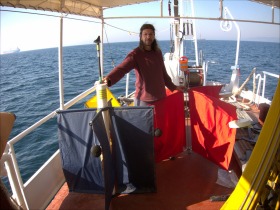
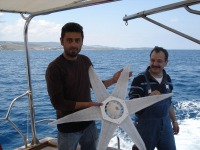
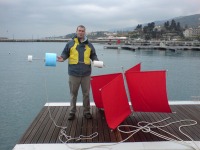
Lucio Bellomo (left) from the Mediterranean Institute of Oceanography (University of Toulon, France), partner in the STRING project, is preparing one of our new drifter designs for deployment in the Adriatic, aboard an Italian vessel (Nov 24, 2013).
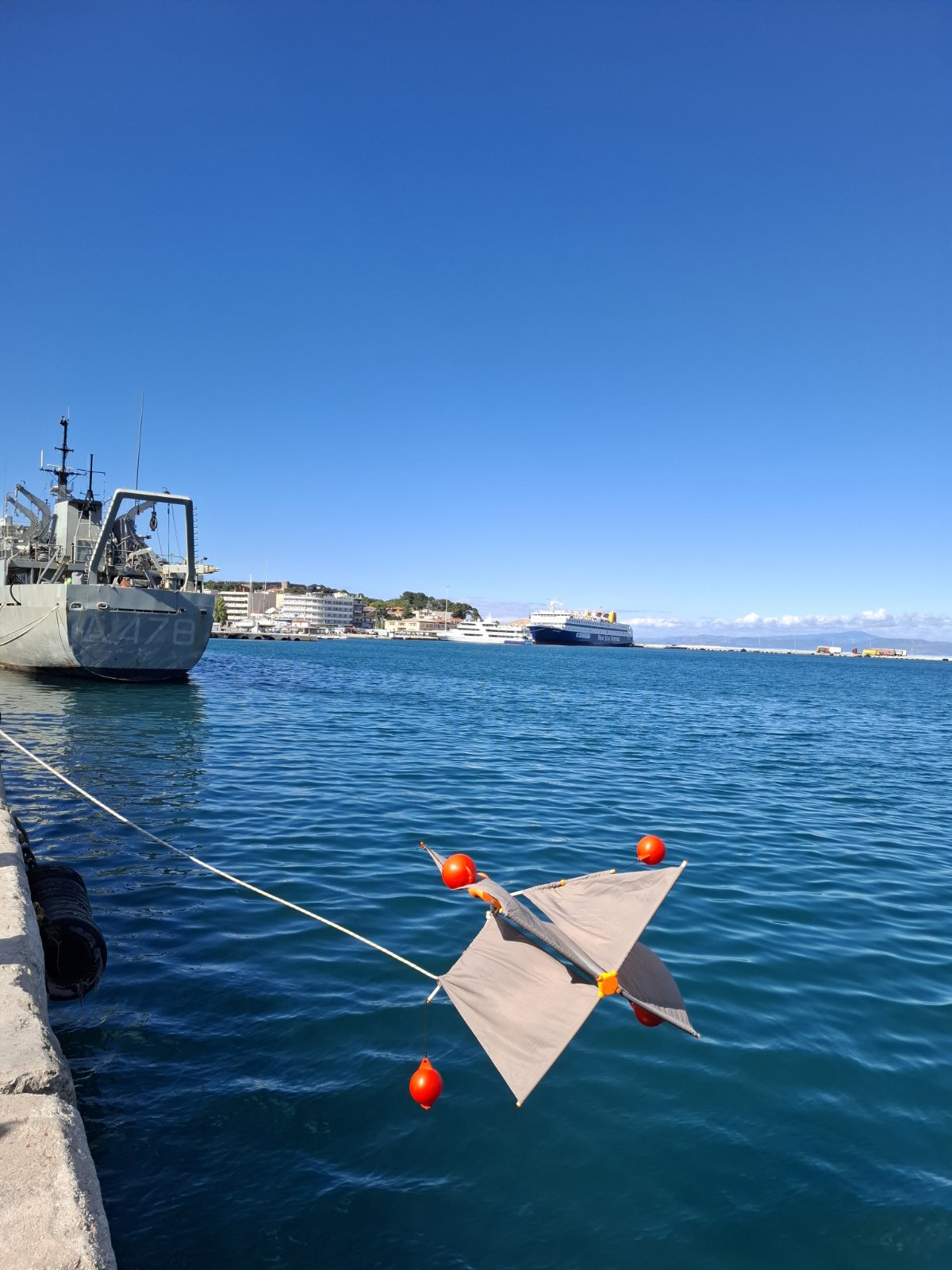
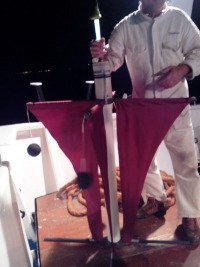
One of the CODE drifters belonging to CNR wearing the new drogue sails designed by the University of the Aegean to simulate an 25 MHz HF radar-derived velocity field, in the framework of the STRING project (24 Nov. 2013).
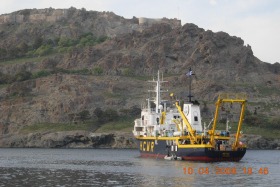
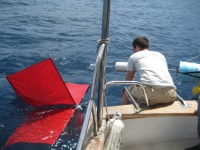
The R/V AEGAEO, belonging to the Hellenic Centre for Marine Research, unloading equipment (drifters) of the University of the Aegean in Myrina, Lemnos (10 April 2008) after a Lagrangian experiment that took place in the North Aegean in the framework of the common project SESAME.
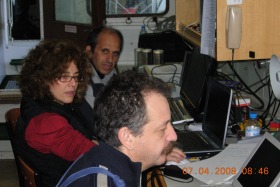
Personnel of the University of the Aegean and the Hellenic Centre for Marine Research cooperating aboard the R/V AEGAEO (7 April 2008).
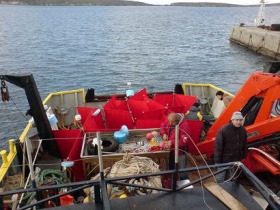
A fleet of University of the Aegeans drifters aboard the HCMR’s R/V PHILIA waiting for deployment in the bay of Sigri (December 2007).
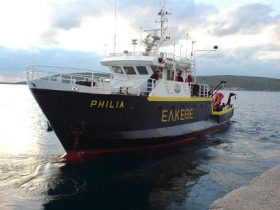
The HCMR’s R/V PHILIA in the bay of Sigri during a collaboration project with the Department of Marine Sciences of the University of the Aegean (December 2007).
Alkis Kalambokis (at the time member of the University of the Aegean’s Physical and Chemical Oceanography group and still a good friend and partner) presenting two different CODE drifters, the typical one (blue sails) and the University of the Aegeans (red sails), in the context of his participation in an O.G.S. organized cruise in the Gulf of Trieste within the TOSCA project (22 October 2012).
Publications, conference announcements and scientific and technical reports do not constitute the only research products. The Laboratory also contributes with near real-time coastal and marine observations, coastal forecasts, novel instruments, services and reports.
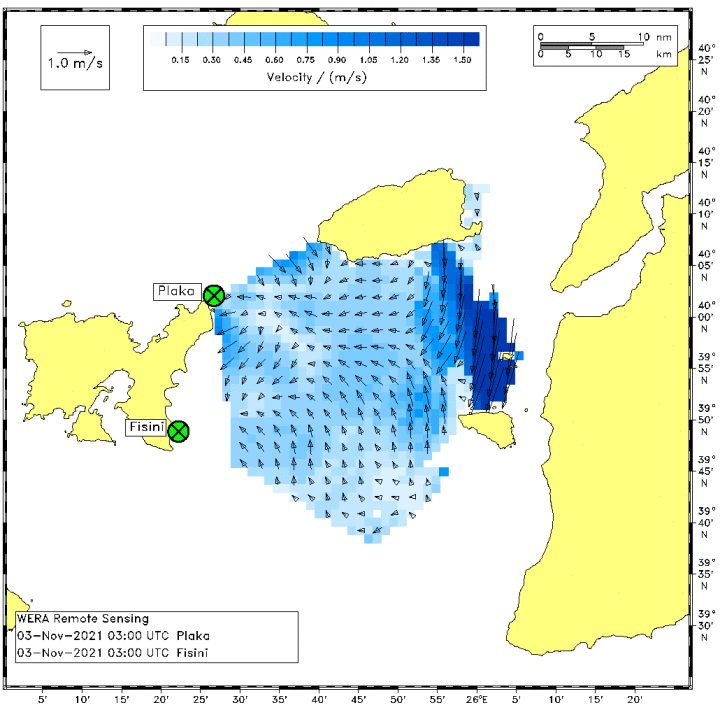
The Dardanos system is a High Frequency (HF) radar, transmitting low-power radio short waves and monitoring the sea-surface circulation east of the island of Lemnos, aiming to contribute to the assessment of the impact of the Black-Sea outflow on the North Aegean Sea. The system is jointly owned and managed by the Department of Marine Sciences of the University of the Aegean and the Institute of Oceanography of the Hellenic Centre for Marine Research. It produces maps of sea-surface circulation every 30 minutes. The most recent map can be accessed
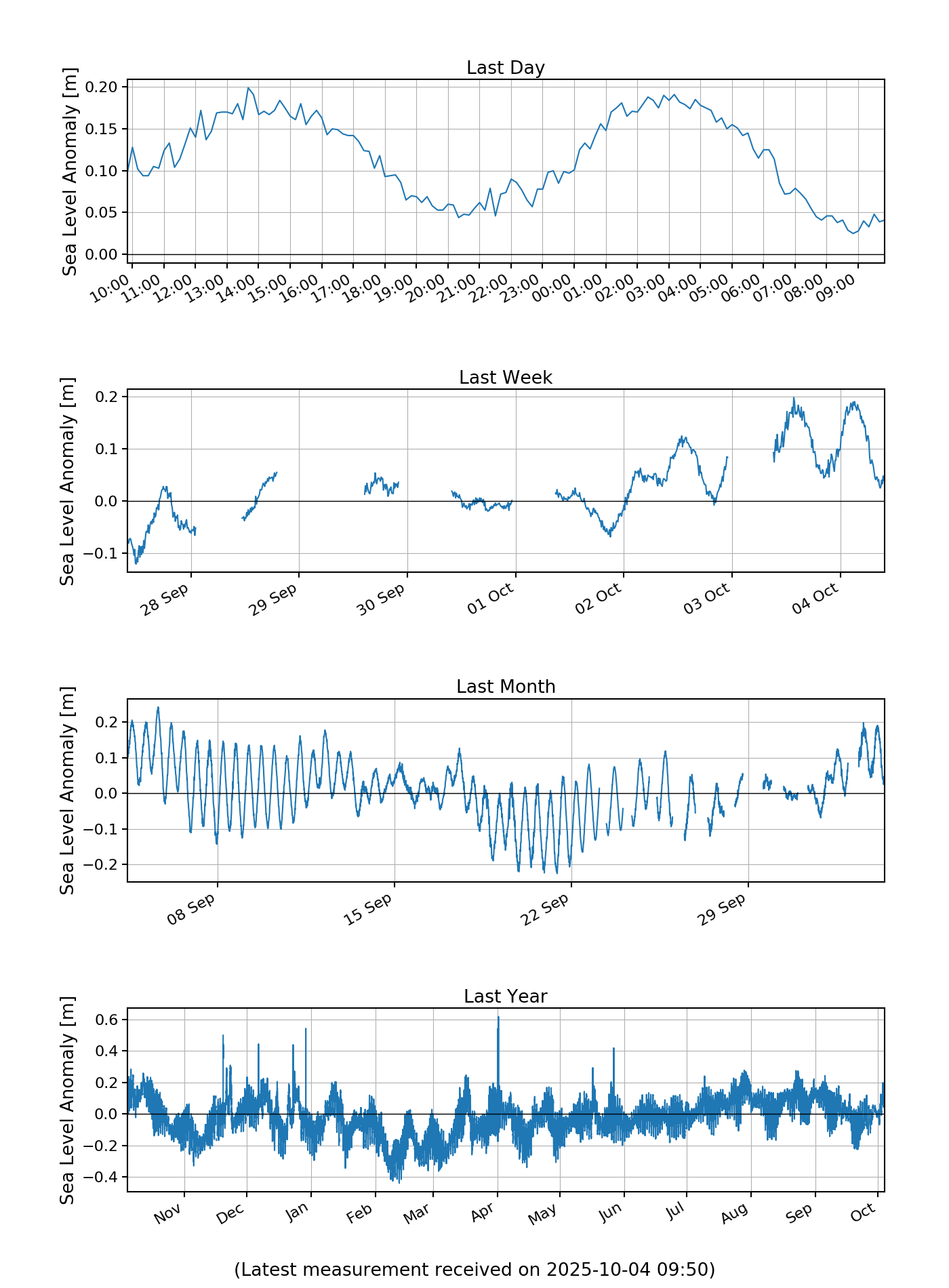
Sea-level at Gulf of Kalloni, as recorded by a sea-level monitoring station located at the port of Skala Kallonis.
The installation of this station was implemented in the frameork of the Coastal Environmental Observatory AEGIS, funded by the North Aegean Prefecture

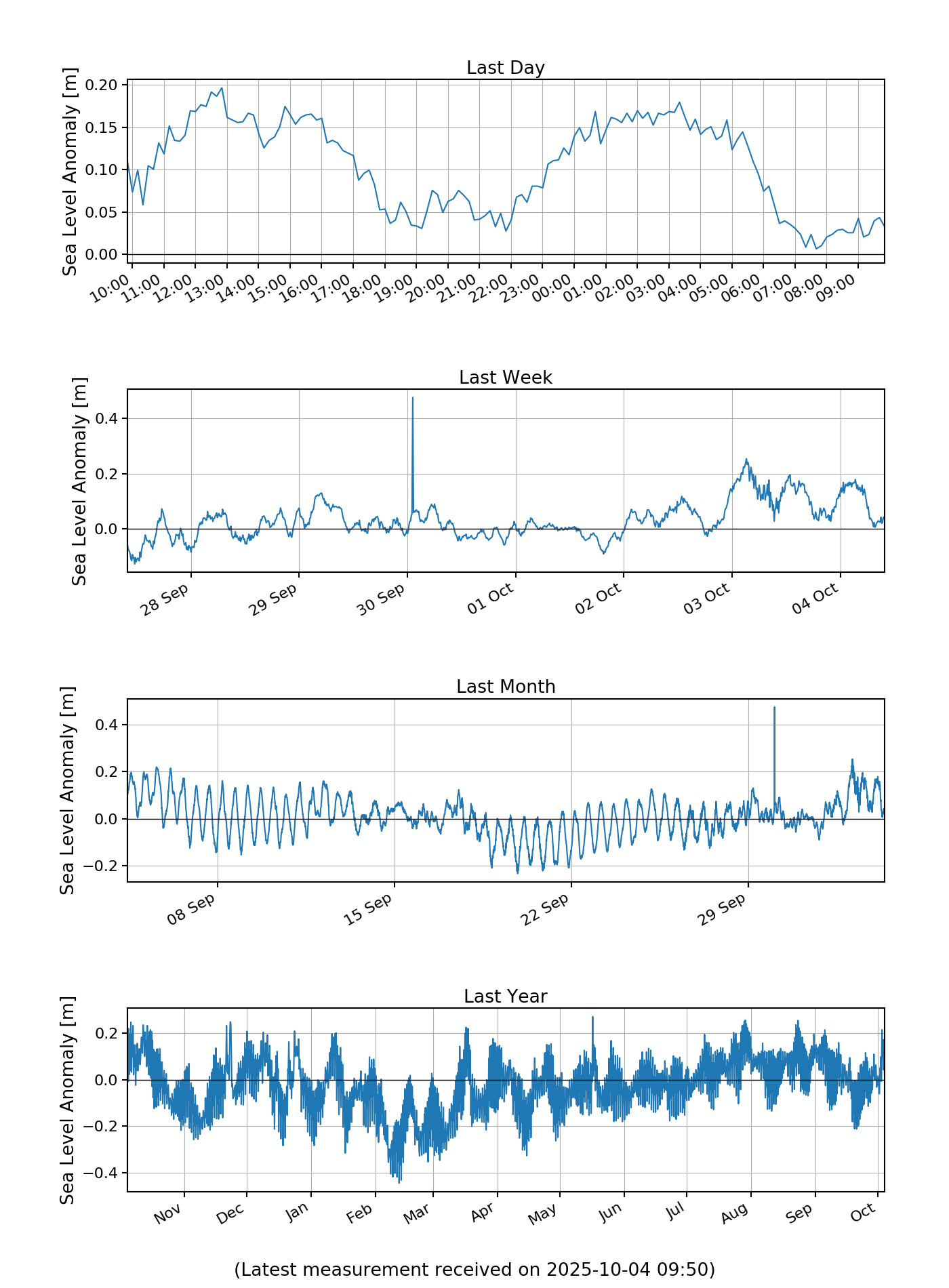
Sea-level at Gulf of Gera, as recorded by a sea-level monitoring station located at the port of Skala Sykountas (Dipi).
The installation of this station was implemented in the frameork of the Coastal Environmental Observatory AEGIS, funded by the North Aegean Prefecture

ΑΤΤΕΝΤΙΟΝ: The Oceanographic Mooring is currently inactive, as it undergoes maintenance. Its redeployment is estimated to take place by the end of November 2025. Whatever values are presented on the related pages correspond to experimental measurements in the Laboratory Tank.
The mooring, funded in the framework of the Coastal Environmental Observatory AEGIS, is equipped with a full array of meteorological and oceanographic sensors. It was deployed on the 28th of January 2020, at the center of the the Gulf, at position
Latitude: 39° 10.064′ N
Longitude: 026° 12.503′ E
Air temperature
Relative humidity
Atmospheric Pressure
Wind speed
Wind direction
Rainfall
Incoming solar radiation
Incoming earth radiation
Water temperature
Water salinity
Depth of measurements
Chlorophyll-a fluoresence
Turbidity
Nitrates concentration
pH
Marine Radioactivity
DISCLAIMER:
The following forecast is the result of a numerical model setup which is still under development.
Caution is advised in the interpretation of the results, which are provided here only for scientific purposes.
The University of the Aegean and the Laboratory of Physical and Chemical Oceanography hold no responsibility for any property damage, physical injury etc. caused by improper use of this data.
DISCLAIMER:
The following forecast is the result of a numerical model setup which is still under development.
Caution is advised in the interpretation of the results, which are provided here only for scientific purposes.
The University of the Aegean and the Laboratory of Physical and Chemical Oceanography hold no responsibility for any property damage, physical injury etc. caused by improper use of this data.
Novel instruments and methodologies have also risen from the research laboratory’s activity. The occupation of a member of the Physical and Chemical Oceanography group with Lagrangian measurements in the context of the Eurofloat project in 1995, led to building expertise in this field.
The full GSM coverage of the Aegean Sea in the early 2000s led to the design and development of novel surface (CODE-type) and subsurface drifters in collaboration with MARAC Electronics S.A. in the framework of the research project TELEFOS.
TELEFOS drifter (από Zervakis, V., Ktistakis, M. and D. Georgopoulos, 2005. Telefos: a new design for coastal drifters. Sea Technology, 46, 2, pp. 25-30) .
The prospect of an oil-pipeline connecting the Black-Sea harbor of Burgas with the Aegean harbor of Alexandroupolis led to a demand for a drifter especially designed to track oil-spills, assigned to our group within the project DIAVLOS. This demand was met by our design of a fully novel drifter, at the time named COSTA (from Coastal Oil Spill Tracking Apparatus, fig. 1). This drifter was later slightly modified by ΤΕΙ Piraeus specially regarding its electronics, and distributed to the partners of the European research project TOSCA for evaluation in the field, leading to very positive results.
COSTA oil-spill tracking drifter. Deployment and recovery from the R/V AMFITRITIin the framework of K. Moschopoulos B.Sc. Thesis and the DIAVLOS research project, 15 May 2008.
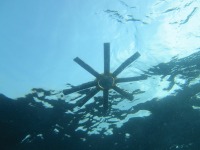
Subsurface view of a COSTA drifter, TOSCA project presentation, Alexandroupolis, 30 May 2013.
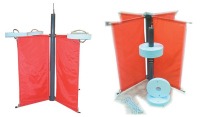
The intensifying demand for drifters has led our research group to the combination of a modified drifter hull with off-the-shelf electronics devices and new software for monitoring the drifters.
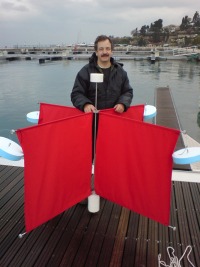
V. Zervakis in the first experimental deployment of our CODE-type drifter in surface mode (17 December 2007), designed by our research group and now offered by the company Marine Drifters.
G. Kakagiannis in the first experimental deployment of our CODE-type drifter in sub-surface mode (17 December 2007), designed by our research group and now offered by the company Marine Drifters.
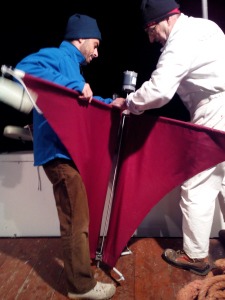
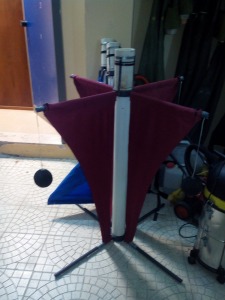
In parallel to the above activity, our group developed a new method for assessing drifter slippage, the upper 2 m water column shear and wave statistics, through the combination of a subsurface drifter and a high-resolution acoustic Doppler profiler Nortek Aquadopp HR. This method provided observations which led to the demand for drifters equipped with drogue sails of a new geometry, specially designed for comparisons with HF radars.
N. Seimenis, undergraduate student of the DMS at the time, recovering the subsurface drifter with the Aquadopp HR attached on the drogues spine aboard the RV AMFITRITI on 31 May 2010 in the framework of his B.Sc. thesis. This methodology was later exploited within the project TOSCA.
CODE drifter belonging to CNR modified with drogue sails designed by the University of the Aegean, ready for deployment in the Adriatic in the framework of the STRING bilateral Greek-French project on 24th November 2013.
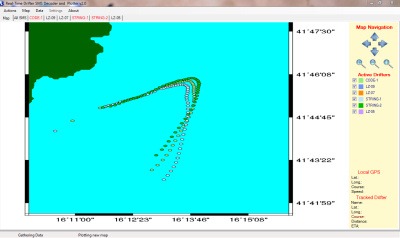
A Software product, tracking drifters from different types and manufacturers, developed by our research associate Alkiviadis Kalampokis, has emerged from the above research work. The latest development is the Android version of the software, which provides extreme agility and ease of use of the base station for drifter monitoring and recovering from a boat.
Screenshot of the new software for drifter tracking.
Krauzig Naomi, 2016: Estimation of vertical mixing in the North Aegean Sea based on ARGO float data
Sideri Maria, 2015: Geostrophic currents and horizontal flows in the North Aegean during a wind-forced upwelling period.
Leo Herold, 2014: Coastal Upwelling observations using Lagrangian methods (in Greek)
Moschopoulou Maria, 2013: Mean sea-level variability in greek coastal areas
Hatziathanassiou Ilias, 2012: A study of coastal upwelling in the northeastern Aegean Sea (in Greek)
LPCO developments
25/11/2024:
Manos Potiris presented his PhD Thesis entitled «Variability of dense water formation and dispersion mechanisms in the Aegean Sea».
29/1/2024:
Dimitra Marmara successfully presented her PhD Thesis entitled: «Study on microplastic particles ingestion and the occurrence of related chemical additives in commercial fish species across different habitats of North Aegean Sea»